

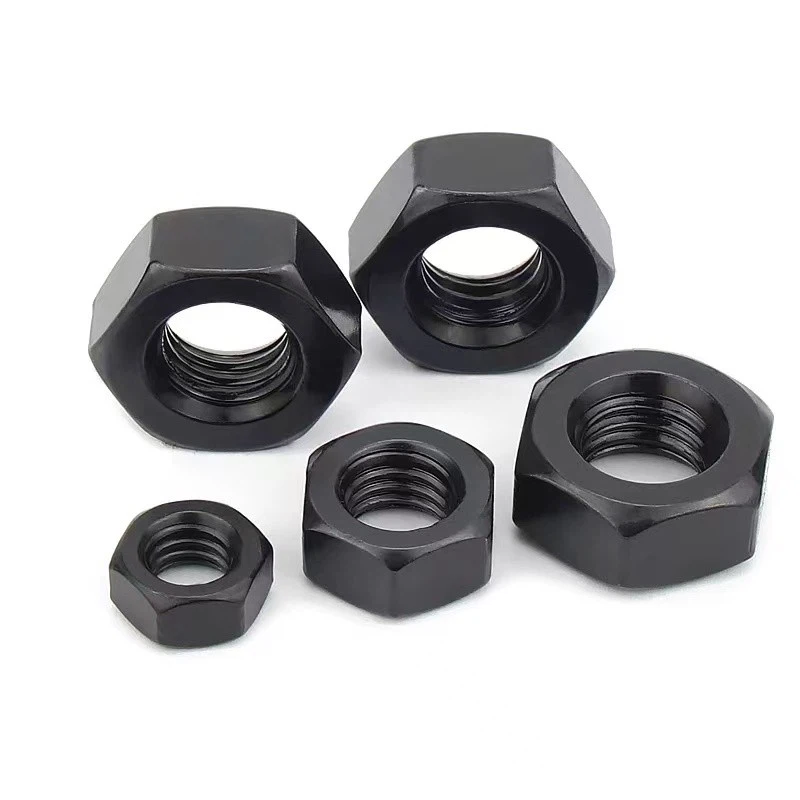
ASTM A563 Heavy Hex Nut
Description
Technical Parameters
ASTM A563 Heavy Hex Nuts are carbon or alloy steel nuts specified for structural and mechanical bolting applications. Their larger width across flats and greater thickness distinguish them from standard hex nuts of the same nominal thread size. The appropriate nut grade, dimensions, and coating depend on the mating bolt specification and the requirements of the bolted joint.
These nuts are used in structural steel connections, infrastructure assemblies, and industrial equipment where specified mechanical properties and dimensional compatibility are required. For high-strength structural bolting, nut selection must follow the applicable structural bolting specification and project requirements.
Product Features
Heavy Hex Dimensions
A wider hex profile and greater thickness provide the specified bearing geometry for compatible bolted assemblies.
Defined Mechanical Requirements
ASTM A563 establishes grade-specific requirements, including proof load and hardness, subject to the applicable size, style, and finish.
Thread Compatibility
Inch-series nuts generally use Unified inch threads with Class 2B tolerances when applicable. Coated nuts may require specified thread allowances.
Grade Identification
Nut markings must conform to the applicable requirements for grade and manufacturer identification.
Finish Options
Plain and specified zinc-based coatings may be available, depending on grade, size, and application requirements.
Inspection Documentation
Proof load, hardness, dimensional inspection, and material documentation should be specified according to the purchase order and applicable standard.
Technical Specifications
|
Parameter |
Specification |
|
Product Type |
Heavy Hex Nut |
|
Product Standard |
ASTM A563 / ASTM A563M |
|
Inch-Series Dimensional Standard |
ASME B18.2.2 |
|
Structural Heavy Hex Nut Standard |
ASME B18.2.6 |
|
Available Grades |
A, B, C, C3, D, DH, DH3 |
|
Thread Series |
UNC, 8-UN |
|
Inch Thread Tolerance |
Unified internal thread, Class 2B |
|
Inch Size Range |
1/4 in to 4 in |
|
Metric Thread Tolerance |
ISO metric internal thread, Class 6H |
|
Metric Size Range |
M6 to M100 |
|
Material |
Carbon Steel, Alloy Steel |
|
Manufacturing Process |
Forging, Thread Tapping, Heat Treatment |
|
Surface Finish |
Plain, Hot-Dip Galvanized, Zinc-Plated |
|
Mechanical Testing |
Proof Load Testing, Hardness Testing |
|
Dimensional Inspection |
Width Across Flats, Nut Thickness, Thread Gauging |
|
Identification Marking |
Manufacturer Identification and Grade Marking |
|
Quality Documentation |
Material Test Report, Inspection Report |
Applications
Structural Steel Construction
Beam-to-column connections and steel frame assemblies using specified structural bolting systems.
01
Bridges and Infrastructure
Bolted steel components in bridges, industrial structures, and infrastructure projects where the design specifies compatible heavy hex nuts.
02
Industrial Equipment
Machinery frames, support structures, and heavy equipment assemblies requiring defined fastener dimensions and mechanical properties.
03
Energy Projects
Steel structures and equipment supports in wind, power generation, and related installations, subject to project specifications.
04
General Mechanical Assemblies
Bolted joints requiring heavy hex nut geometry and a grade selected for the applicable fastener system.
05
Key Selection Factors
Nut Grade and Bolt Compatibility: Select the nut grade according to the mating bolt specification, bolt group, coating condition, and applicable structural connection requirements. Do not assume that a higher nut grade is automatically acceptable for every lower-strength bolt.
Dimensions and Thread: Confirm nominal diameter, thread pitch, width across flats, thickness, and the applicable dimensional standard. Specify inch or metric threads explicitly.
Coating and Thread Allowance: For hot-dip galvanized assemblies, verify the applicable coating specification and required thread allowance. Overtapping requirements depend on the coating process and governing fastener specification.
Testing and Documentation: Identify required proof load, hardness, dimensional checks, traceability records, and inspection certificates in the purchase order.
Frequently Asked Questions
Q: What is the difference between a standard hex nut and a heavy hex nut?
A: A heavy hex nut has a larger width across flats and greater thickness than a standard hex nut of the same nominal thread size. The applicable dimensional standard determines its required geometry.
Q: How do I select an ASTM A563 nut grade?
A: Check the mating bolt specification, structural bolt group, coating, and project requirements. For structural bolting assemblies, follow the applicable structural connection specification rather than selecting a grade based on strength alone.
Q: Can ASTM A563 heavy hex nuts be hot-dip galvanized?
A: Coated options may be available when permitted by the applicable grade and fastener specification. Confirm the coating standard, thread allowance, and compatibility with the mating bolt before ordering.
Q: What inspection documents are available?
A: Proof load, hardness, dimensional inspection, and material documentation can be specified according to the applicable requirements and supplier capabilities. Confirm the required report type and inspection scope before purchase.
Request a Quote
To receive a quotation, provide the following information:
- Nominal diameter and thread pitch
- Required ASTM A563 grade
- Applicable dimensional standard
- Surface finish and coating specification
- Order quantity and delivery destination
- Required inspection, certification, marking, and packaging details
Provide the mating bolt specification or engineering drawing when available. This helps verify dimensional and grade compatibility before production.
Hot Tags: astm a563 heavy hex nut, China astm a563 heavy hex nut manufacturers, suppliers, factory
Previous
No InformationNext
No InformationSend Inquiry


