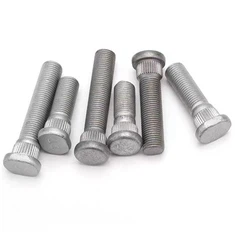
Precision Shoulder Bolt
Description
Technical Parameters
Precision shoulder bolts are threaded fasteners with an unthreaded cylindrical shoulder that serves as a locating surface, pivot, or bearing surface in mechanical assemblies. The shoulder establishes the positioning distance between the head and the threaded mounting section, while the thread secures the fastener to the mating component.
Unlike conventional bolts, shoulder bolts use the cylindrical section to locate moving or stationary components. Selection depends on shoulder diameter, shoulder length, thread size, fit requirements, material, and operating loads. They are used in tooling fixtures, machinery linkages, conveyor mechanisms, and automation equipment where the dimensions of the locating surface affect assembly fit and movement.
Custom precision shoulder bolts can be specified by engineering drawing, including non-standard shoulder dimensions, thread lengths, head configurations, and surface finishes.
Product Features
Ground Shoulder Surface: Precision grinding can be specified for shoulder diameters requiring controlled dimensions and surface finish. Actual tolerances depend on nominal diameter and the agreed drawing.
Defined Shoulder Geometry: Shoulder diameter and length determine the fit and spacing of mounted components. Head dimensions and the shoulder-to-thread transition should also be considered during design.
Material Selection: Alloy steel and stainless steel options support different strength, hardness, and corrosion-resistance requirements. Final properties depend on the selected material condition and manufacturing process.
Custom Thread Configurations: Metric and inch-series threads can be specified according to the required diameter, pitch, thread length, and applicable thread standard.
Drawing-Based Production: Custom dimensions, head styles, and surface treatments can be defined through 2D drawings, 3D models, or approved samples.
Technical Specifications
|
Parameter |
Specification |
|
Product Type |
Precision shoulder bolt; custom shoulder fastener |
|
Shoulder Diameter (D) |
Metric examples: 6, 8, 10, 12, 16, 20, and 24 mm; inch examples: 1/4, 5/16, 3/8, 1/2, 5/8, 3/4, and 1 in |
|
Shoulder Length (L) |
Custom dimensions specified in engineering drawings |
|
Thread Size |
Metric examples: M4, M5, M6, M8, M10, M12, M16, and M20; inch threads: UNC or UNF |
|
Thread Length (E) |
Custom dimensions specified according to thread engagement and component thickness |
|
Head Configuration |
Socket head, hex head, or custom head geometry |
|
Material Options |
Alloy steel: 40Cr, 42CrMo; stainless steel: 304, 316 |
|
Mechanical Property Class |
Class 10.9 or 12.9 for products meeting the applicable mechanical property requirements |
|
Shoulder Diameter Tolerance |
Specified by nominal diameter and engineering drawing; ISO 286 tolerance classes applied where appropriate |
|
Thread Specification |
ISO metric threads; Unified UNC/UNF threads with specified thread tolerance classes |
|
Surface Finish |
Black oxide, zinc plating, stainless steel passivation, or specified protective coating |
|
Inspection Requirements |
Dimensional inspection, thread verification, and material documentation according to agreed purchase requirements |
|
Applicable Standards |
Applicable dimensional, thread, material, and inspection standards specified in the engineering drawing or purchase specification |
Applications
Tooling and Mold Assemblies
Shoulder bolts can locate stripper plates, guide components, and pivoting elements in stamping dies, fixtures, and mold-related equipment. Shoulder dimensions should match the mating hole and required movement.
Automation Equipment
In assembly machinery, shoulder bolts can serve as pivot points for linkages and mounting points for rollers or guide components. Thread engagement and clearance must be specified for the assembly design.
Conveyor and Material Handling Systems
They can secure rollers, guide mechanisms, and pivoting gates where a defined cylindrical mounting surface is required. Load direction, alignment, and operating frequency should be considered during selection.
General Industrial Machinery
Shoulder bolts are used in brackets, adjustment mechanisms, and articulated assemblies requiring a threaded mounting section combined with a cylindrical locating surface.
Key Selection Factors
Shoulder Diameter and Fit: Specify the nominal diameter, dimensional tolerance, and mating-hole tolerance. A clearance fit may be appropriate for rotation or sliding, while a tighter fit may be required for fixed location. The correct fit depends on the assembly design.
Shoulder Length: Calculate the required length from the thickness of the mounted components and the intended clearance. The shoulder should provide the required bearing surface without causing the threaded section to interfere with the moving component.
Thread Engagement: Select thread diameter, pitch, and engagement length according to the mating material, applied load, and available installation space. Do not assume the thread should carry shear loads when the design intends the shoulder to act as the load-bearing section.
Material and Environment: Alloy steel may be suitable for applications requiring specified mechanical properties. Stainless steel may be selected for moisture exposure or certain corrosive environments, subject to chemical compatibility and mechanical requirements.
Surface Treatment and Inspection: Specify coating type and any applicable thickness, corrosion, or dimensional requirements. Confirm whether material certificates, hardness tests, thread gauges, or dimensional inspection reports are required for each batch.
Our Certificate


Frequently Asked Questions
Q: Can shoulder bolts be manufactured to custom dimensions?
A: Custom shoulder diameter, shoulder length, thread length, and head geometry can be defined on an engineering drawing. Feasibility depends on the dimensions, material, tolerances, and confirmed production capabilities.
Q: How is shoulder dimensional accuracy verified?
A: The inspection plan should identify the critical dimensions, measuring instruments, tolerance limits, and sampling requirements. Concentricity or runout requirements should be specified separately when they are important to the assembly.
Q: Can material and inspection documents be supplied?
A: Material test reports and dimensional inspection reports can be requested in the purchase specification. Availability, report content, and batch traceability should be confirmed before order placement.
Q: What is the production lead time?
A: Lead time depends on order quantity, material availability, tooling requirements, machining, heat treatment, and surface finishing. Request a quotation with the required delivery schedule for confirmation.
Request a Quote
Send your drawings or specifications, including shoulder dimensions, thread size, material, surface finish, and order quantity, to receive a quotation for your precision shoulder bolts.
Hot Tags: precision shoulder bolt, China precision shoulder bolt manufacturers, suppliers, factory
Previous
No InformationSend Inquiry