

What is the weight of a flange nut?
Dec 01, 2025
Leave a message
Hey there! As a flange nut supplier, I often get asked about the weight of flange nuts. It might seem like a simple question, but there's actually a lot more to it than you'd think. In this blog, I'm gonna break down everything you need to know about the weight of flange nuts.
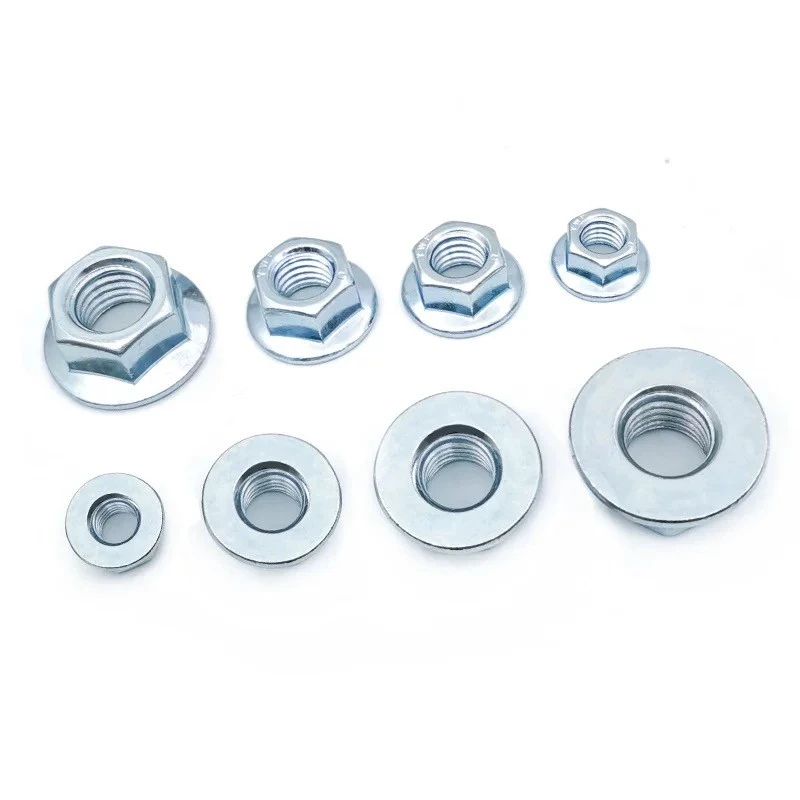
First off, let's understand what a flange nut is. A flange nut is a type of nut with a wide flange at one end that acts as an integrated washer. This flange distributes the pressure of the nut over a larger area, which helps prevent damage to the surface it's being tightened against. It also reduces the chances of the nut loosening due to vibration.
Now, the weight of a flange nut can vary greatly depending on several factors. The most obvious one is the size of the nut. Just like with any other object, bigger nuts generally weigh more than smaller ones. For example, a 22mm Flange Nut is going to be heavier than a 10mm flange nut. The diameter of the nut, along with the thickness of the flange and the overall height of the nut, all contribute to its weight.
The material the flange nut is made from also plays a huge role in determining its weight. Flange nuts can be made from a variety of materials, including steel, stainless steel, brass, and nylon. Steel is a common choice because it's strong and relatively inexpensive. However, steel nuts are heavier compared to nuts made from some other materials. Stainless steel, on the other hand, is corrosion - resistant, but it also has a different density than regular steel, which can affect the weight. Brass nuts are often used in applications where conductivity or a more decorative look is required, and they have their own characteristic weight based on the density of brass. Nylon nuts are lightweight and are typically used in applications where electrical insulation or reduced noise is important.
Let's take a closer look at some common standards of flange nuts. One of the well - known standards is the DIN6923 Flange Nut. DIN standards are widely recognized in Europe and many other parts of the world. A DIN6923 flange nut has specific dimensions and tolerances defined by the standard. These dimensions directly influence its weight. For instance, if you compare two DIN6923 flange nuts of the same size but made from different materials, say steel and brass, the steel one will be heavier because steel has a higher density than brass.
Another type is the Hex Flange Lock Nut. These nuts have a locking feature, which might add a bit of extra weight compared to regular flange nuts. The locking mechanism could be a nylon insert or a deformed thread, and these additional components contribute to the overall mass of the nut.
To get an accurate idea of the weight of a flange nut, you can refer to manufacturer's specifications. Most reliable manufacturers provide detailed information about the weight of their flange nuts, along with other technical data such as dimensions, material properties, and torque values. You can also use some basic formulas to estimate the weight if you know the material density and the volume of the nut. The volume of a flange nut can be calculated by considering it as a combination of geometric shapes, like cylinders and discs.
For example, if you have a simple cylindrical part of the nut and a disc - shaped flange, you can calculate their volumes separately and then add them together. The formula for the volume of a cylinder is V = πr²h (where r is the radius and h is the height), and for a disc, it's V = πr²t (where t is the thickness). Once you have the volume, you can multiply it by the density of the material to get the weight.
But keep in mind that these calculations are approximations. In real - world manufacturing, there might be some variations due to manufacturing processes, such as machining tolerances and surface finishes.
Now, why does the weight of a flange nut matter? Well, in some applications, weight is a critical factor. For example, in the aerospace industry, every gram counts. Using lighter flange nuts can help reduce the overall weight of an aircraft, which in turn can improve fuel efficiency. In automotive applications, reducing weight can also lead to better performance and fuel economy.
On the other hand, in some heavy - duty industrial applications, a heavier flange nut might be preferred. A heavier nut can provide more stability and better resistance to vibration and shock. It can also handle higher loads without loosening or failing.
As a flange nut supplier, I understand that different customers have different requirements. Whether you need a lightweight nylon flange nut for an electronics project or a heavy - duty steel flange nut for a construction application, I've got you covered. I work with a wide range of manufacturers to source high - quality flange nuts in various sizes, materials, and standards.
If you're in the market for flange nuts and you're concerned about the weight, I can help you find the perfect fit for your needs. I can provide you with detailed information about the weight of different flange nuts, along with other technical specifications. You can trust that the flange nuts I supply meet the highest quality standards.
So, if you're interested in purchasing flange nuts, don't hesitate to reach out. Whether it's for a small DIY project or a large - scale industrial application, I'm here to assist you. We can discuss your specific requirements, and I'll make sure you get the right flange nuts at a competitive price.
In conclusion, the weight of a flange nut is influenced by its size, material, and design. By understanding these factors, you can make an informed decision when choosing the right flange nut for your project. And if you need any help along the way, just give me a shout.

References
- Machinery's Handbook
- Manufacturer's catalogs for flange nuts