

What is the tensile strength of double head bolts?
Sep 25, 2025
Leave a message
Tensile strength is a crucial mechanical property when it comes to double head bolts. As a professional double head bolt supplier, I've encountered numerous inquiries regarding the tensile strength of these essential fasteners. In this blog, I'll delve into what tensile strength means for double head bolts, factors influencing it, and how it impacts their real - world applications.
Understanding Tensile Strength
Tensile strength refers to the maximum amount of tensile (pulling) stress that a material can withstand before it fractures or breaks. For double head bolts, this property determines how much load they can bear when subjected to forces that try to pull them apart. It is usually measured in units of force per unit area, such as megapascals (MPa) or pounds per square inch (psi).
The tensile strength of a double head bolt is a key indicator of its quality and performance. A bolt with high tensile strength can handle greater loads without failing, which is essential in applications where structural integrity is of utmost importance. For example, in construction projects, double head bolts are used to connect structural elements. If the bolts have insufficient tensile strength, they may break under heavy loads, leading to potential structural failures.
Factors Affecting the Tensile Strength of Double Head Bolts
Material Composition
The material from which a double head bolt is made plays a significant role in determining its tensile strength. Commonly used materials for double head bolts include carbon steel, alloy steel, and stainless steel.
Carbon steel bolts are widely used due to their relatively low cost. However, their tensile strength can vary depending on the carbon content. As the carbon content increases, the tensile strength of the steel generally increases, but its ductility decreases. For instance, low - carbon steel bolts may have a tensile strength in the range of 300 - 400 MPa, while high - carbon steel bolts can have tensile strengths exceeding 1000 MPa.
Alloy steel bolts are made by adding various alloying elements such as chromium, nickel, and molybdenum to the steel. These alloying elements enhance the mechanical properties of the steel, including its tensile strength. Alloy steel double head bolts can have very high tensile strengths, often in the range of 800 - 1500 MPa, making them suitable for high - stress applications.
Stainless steel bolts are known for their corrosion resistance. The tensile strength of stainless steel bolts depends on the specific grade of stainless steel. For example, A2 stainless steel bolts typically have a tensile strength of around 500 - 700 MPa, while A4 stainless steel bolts can have a higher tensile strength, usually in the range of 600 - 800 MPa.
Heat Treatment
Heat treatment is another important factor that affects the tensile strength of double head bolts. Processes such as quenching and tempering can significantly improve the mechanical properties of the bolts.
Quenching involves rapidly cooling the bolt from a high temperature, which forms a hard and brittle martensitic structure. However, this structure is often too brittle for practical use. Tempering is then carried out to reduce the brittleness and improve the toughness of the bolt. By carefully controlling the quenching and tempering process, the tensile strength of the bolt can be optimized. For example, a 10.9 grade black double - head bolt 10.9 Grade Black Double - head Bolt is a high - strength bolt that has undergone specific heat treatment processes to achieve a high tensile strength of around 1040 - 1240 MPa.
Manufacturing Process
The manufacturing process of double head bolts can also influence their tensile strength. Precision machining ensures that the bolts have the correct dimensions and a smooth surface finish. Any defects such as cracks, voids, or inclusions in the bolt can act as stress concentrators, reducing the bolt's tensile strength.
Cold forging is a common manufacturing process for double head bolts. This process can improve the grain structure of the material, resulting in increased strength. In contrast, bolts produced by casting may have a more porous structure, which can lead to lower tensile strength compared to forged bolts.
Measuring the Tensile Strength of Double Head Bolts
The tensile strength of double head bolts is typically measured through a tensile test. In a tensile test, a bolt specimen is placed in a testing machine, and a gradually increasing tensile force is applied until the bolt fractures. The maximum force applied before fracture is recorded, and the tensile strength is calculated by dividing this force by the cross - sectional area of the bolt.
Standards such as ASTM (American Society for Testing and Materials) and ISO (International Organization for Standardization) provide guidelines for conducting tensile tests on bolts. These standards ensure that the test results are accurate and comparable across different manufacturers.
Importance of Tensile Strength in Different Applications
Construction Industry
In the construction industry, double head bolts are used to connect structural steel members, concrete elements, and other building components. High - tensile strength bolts are essential in high - rise buildings, bridges, and industrial structures where they need to withstand heavy loads, including dead loads, live loads, and wind loads. For example, GB901 Double - headed Bolt is a type of double head bolt commonly used in construction, and its appropriate tensile strength ensures the stability and safety of the structure.
Automotive Industry
In the automotive industry, double head bolts are used in engines, transmissions, and suspension systems. These bolts need to have sufficient tensile strength to withstand the high - speed vibrations, dynamic loads, and temperature variations in the automotive environment. For instance, in an engine, double head bolts are used to secure the cylinder head to the engine block. A bolt with inadequate tensile strength may loosen or break, leading to engine failure.
Machinery and Equipment Manufacturing
In machinery and equipment manufacturing, double head bolts are used to assemble various components. The tensile strength of these bolts determines the reliability and durability of the machinery. For example, in heavy - duty machinery, high - strength double head bolts are used to connect large - scale components, ensuring that the machinery can operate under high - stress conditions without failure.
Our Product Range and Tensile Strength
As a double head bolt supplier, we offer a wide range of double head bolts with different tensile strengths to meet the diverse needs of our customers. Our M10 Double Head Bolt is available in various materials and grades, each with its own specific tensile strength. Whether you need a bolt for a low - stress application or a high - stress environment, we can provide you with the right product.
We ensure that all our double head bolts are manufactured to the highest quality standards. Our quality control team conducts strict inspections and tests, including tensile tests, to ensure that each bolt meets or exceeds the specified tensile strength requirements.
Conclusion
The tensile strength of double head bolts is a critical property that determines their performance and suitability for different applications. Factors such as material composition, heat treatment, and manufacturing process all play important roles in determining the tensile strength of these bolts.

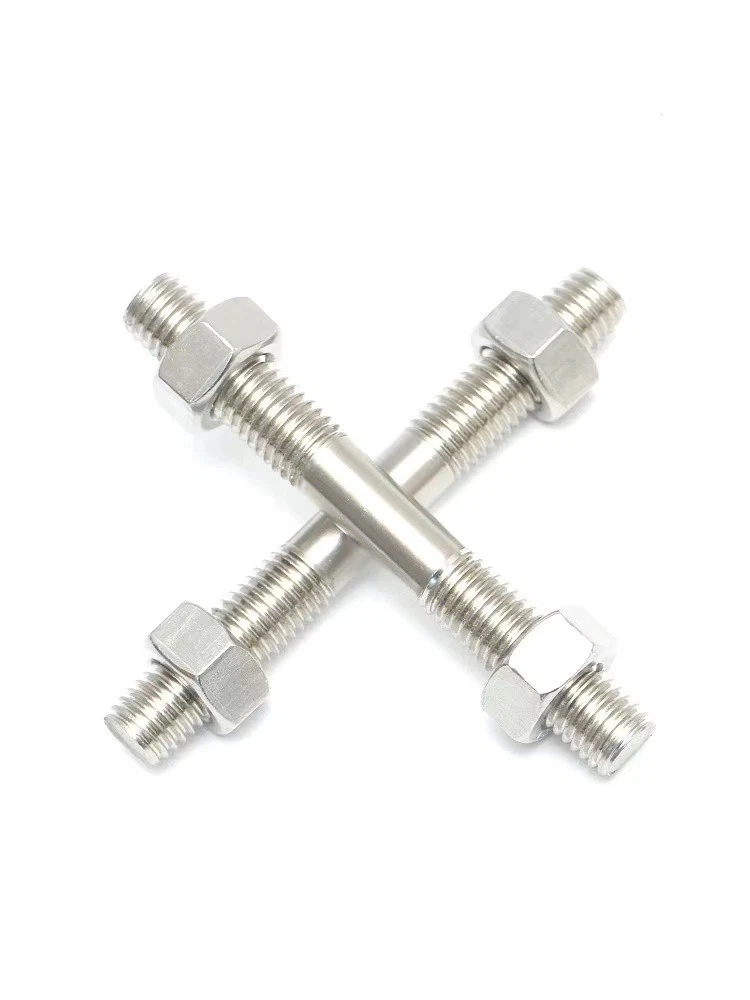
If you are in need of high - quality double head bolts with the appropriate tensile strength for your project, we are here to help. Our experienced team can provide you with professional advice and guidance to select the right bolts for your specific needs. Contact us today to start your procurement negotiation and ensure the success of your project.
References
- ASM Handbook Volume 1: Properties and Selection: Irons, Steels, and High - Performance Alloys. ASM International.
- ASTM Standards on Fasteners. ASTM International.
- ISO Standards for Mechanical Properties of Fasteners. International Organization for Standardization.