

What torque should be applied when tightening a hex flange lock nut?
Aug 18, 2026
Leave a message
Hey there! As a supplier of Hex Flange Lock Nut, I often get asked about the right torque to apply when tightening these nuts. It's a crucial question because getting the torque wrong can lead to all sorts of problems, from loose connections that can cause machinery to malfunction, to over - tightened nuts that might damage the parts they're holding together.
Let's start by understanding what torque is. Torque is basically a measure of the force that causes an object to rotate. When we're talking about tightening a hex flange lock nut, we're using torque to create a clamping force between the nut and the surface it's being tightened against. This clamping force is what keeps the nut in place and ensures a secure connection.
The amount of torque you should apply depends on several factors. One of the most important factors is the size of the nut. For example, a 22mm Flange Nut will require a different amount of torque compared to a smaller one. Generally, larger nuts need more torque because they have a greater surface area and are designed to handle more stress.
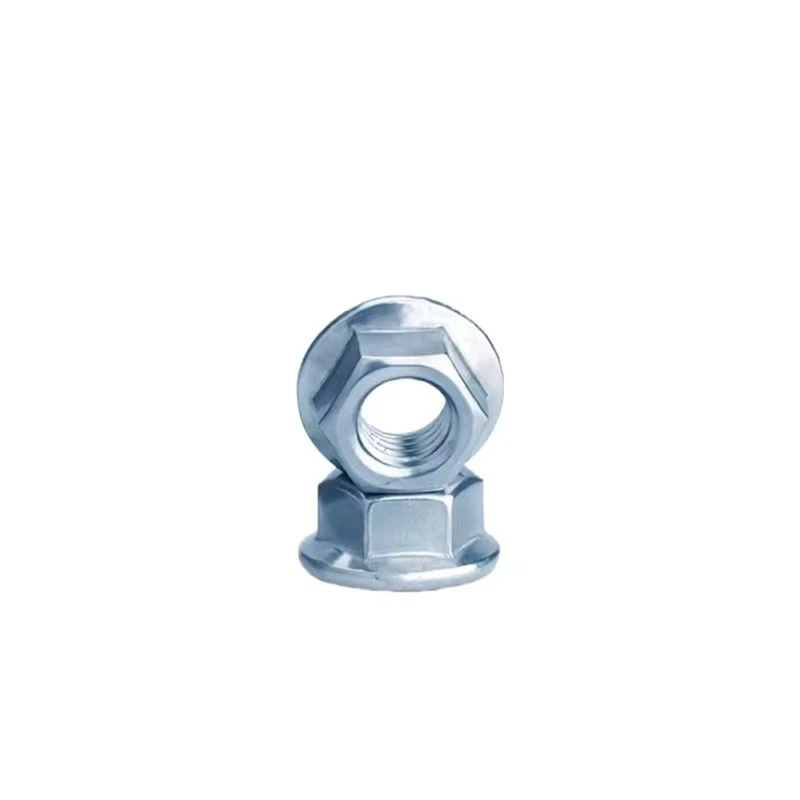
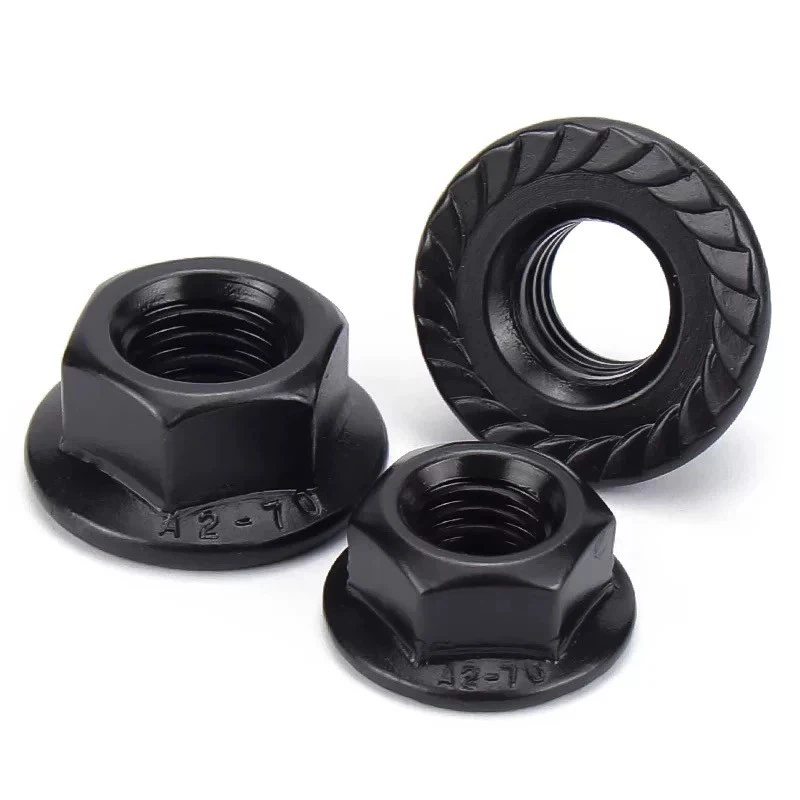
Another factor is the material of the nut and the bolt it's being used with. If you're using a 8 Grade Galvanized Flange Nut, which is made of high - strength steel and has a galvanized coating for corrosion resistance, it can handle more torque than a nut made of a softer material. The material of the mating surface also matters. If it's a soft material like aluminum, you need to be more careful with the torque to avoid damaging it.
The type of application also plays a big role. In a high - vibration environment, you might need to apply more torque to prevent the nut from loosening over time. On the other hand, in a precision application where you don't want to over - stress the components, you'll need to be more conservative with the torque.
So, how do you determine the right torque? Well, the first place to look is the manufacturer's specifications. Most nut manufacturers provide recommended torque values based on the size, grade, and material of the nut. These values are usually determined through extensive testing to ensure the best performance and safety.
If you don't have access to the manufacturer's specs, there are some general guidelines you can follow. For metric nuts, a common rule of thumb is to use a torque value in Newton - meters (Nm). For example, for a small M8 hex flange lock nut, the recommended torque might be around 20 - 25 Nm. For an M12 nut, it could be around 50 - 60 Nm. But remember, these are just rough estimates and can vary depending on the factors we mentioned earlier.
When it comes to measuring the torque, you'll need a torque wrench. A torque wrench is a special tool that allows you to apply a specific amount of torque to a nut or bolt. There are different types of torque wrenches, such as click - type, beam - type, and digital torque wrenches. Click - type torque wrenches are the most common. They make a clicking sound when the preset torque value is reached, which tells you to stop tightening.
Here's a step - by - step guide on how to use a torque wrench to tighten a hex flange lock nut:
- First, make sure the nut and the bolt are clean and free of any debris or rust. This ensures a proper fit and accurate torque application.
- Set the torque wrench to the recommended torque value. You can do this by adjusting the handle or using the digital display on a digital torque wrench.
- Place the torque wrench on the nut and start turning it clockwise. Apply a steady and even force.
- Keep turning until you hear the click sound (if you're using a click - type torque wrench) or until the digital display shows that you've reached the set torque value.
- Once you've reached the correct torque, stop tightening. Don't try to over - tighten the nut, as this can cause damage.
It's also important to note that you might need to re - check the torque after the nut has been in use for a while. In some applications, the initial tightening can cause the components to settle, which might result in a slight loss of torque. Re - checking and re - tightening if necessary can help maintain a secure connection.
Now, let's talk about some common mistakes to avoid when tightening hex flange lock nuts. One of the biggest mistakes is using the wrong torque value. As we've discussed, using too little torque can result in a loose connection, while using too much can damage the nut, the bolt, or the mating surface.
Another mistake is not using a torque wrench at all. Some people might think they can estimate the torque by hand, but this is very inaccurate and can lead to problems. A torque wrench is a relatively inexpensive tool that can save you a lot of headaches in the long run.
Also, make sure you're using the right size and type of torque wrench for the job. Using a torque wrench that's too small or too large for the nut can give inaccurate readings.
In conclusion, getting the right torque when tightening a hex flange lock nut is essential for a safe and reliable connection. By considering factors like the size, material, and application of the nut, referring to the manufacturer's specifications, and using a torque wrench correctly, you can ensure that your nuts are tightened to the proper level.
If you're in the market for high - quality hex flange lock nuts or have any questions about torque values and applications, don't hesitate to reach out. We're here to help you make the right choices for your projects. Whether you need a 22mm Flange Nut, a Hex Flange Lock Nut, or an 8 Grade Galvanized Flange Nut, we've got you covered. Let's start a conversation about your procurement needs and find the best solutions together.
References
- Machinery's Handbook, 31st Edition
- Fastener Standards and Specifications by various industry associations