

What is the yield strength of inner hexagon bolts?
Dec 17, 2025
Leave a message
Okay, so you're probably wondering, "What the heck is the yield strength of inner hexagon bolts?" Well, stick around, 'cause I'm about to break it down for you. I'm an inner hexagon bolt supplier, and I've seen it all when it comes to these little guys.
Understanding Yield Strength
First off, let's talk about what yield strength actually means. Yield strength is the point at which a material starts to deform permanently. In the case of inner hexagon bolts, it's the maximum stress they can handle before they stop acting like a spring and start to bend or stretch for good.
Think of it like a rubber band. When you pull a rubber band, it stretches, but as long as you don't pull too hard, it goes back to its original shape. That's elastic deformation. But once you pull it too far, it doesn't go back - that's when it reaches its yield point, similar to what happens with inner hexagon bolts.
Why Yield Strength Matters
Why does this matter in the real world? Well, if you're using inner hexagon bolts in a project, you need to know how much stress they can take. If you use bolts with a yield strength that's too low, they might start to deform under normal use. That can lead to all sorts of problems, like loosening connections, equipment failure, or even safety hazards.
For example, if you're building a bridge, you need bolts that can handle the weight of the traffic and the forces of nature. Using bolts with insufficient yield strength could mean disaster. On the other hand, if you use bolts with a much higher yield strength than you need, you're probably spending more money than you have to. So, finding the right balance is key.
Factors Affecting Yield Strength
A bunch of factors can affect the yield strength of inner hexagon bolts. One of the big ones is the material they're made from. Bolts can be made from different types of steel, like carbon steel, alloy steel, or stainless steel. Each material has its own unique properties, which means different yield strengths.
Carbon steel bolts are pretty common and usually have a decent yield strength. They're also relatively inexpensive, which makes them a popular choice for many applications. Alloy steel bolts, on the other hand, are made by adding other elements to the steel, like chromium, nickel, or molybdenum. These additives can increase the strength and toughness of the bolts, resulting in a higher yield strength.
Stainless steel bolts are known for their corrosion resistance, but their yield strength can vary depending on the specific grade. Some stainless steel grades have a lower yield strength compared to carbon or alloy steel, but they're still suitable for applications where corrosion is a concern.
Another factor is the heat treatment process. Heat treating can change the microstructure of the steel, which in turn affects its mechanical properties. For example, quenching and tempering can increase the yield strength of bolts by making the steel harder and more resistant to deformation.
The manufacturing process also plays a role. Bolts that are forged tend to have a higher yield strength than those that are machined. Forging compresses the metal, making it more dense and strengthening the grain structure.
Yield Strength of Different Types of Inner Hexagon Bolts
Let's take a look at some specific types of inner hexagon bolts and their yield strengths.
We've got the Half Tooth Cylindrical Cup Head Bolt. These bolts are often used in machinery and equipment where a flush finish is required. The yield strength of these bolts can vary depending on the material and size. Typically, carbon steel half tooth cylindrical cup head bolts have a yield strength in the range of 300 - 500 MPa, while alloy steel ones can have a yield strength of 600 - 800 MPa or more.
Then there's the 10.9 Grade Hexagonal Bolt. The "10.9" here refers to the grade of the bolt, which indicates its strength. Bolts of this grade are made from high - strength alloy steel and are heat - treated. They have a minimum yield strength of 900 MPa. That's pretty impressive, and it makes them suitable for heavy - duty applications like automotive engines, construction equipment, and industrial machinery.
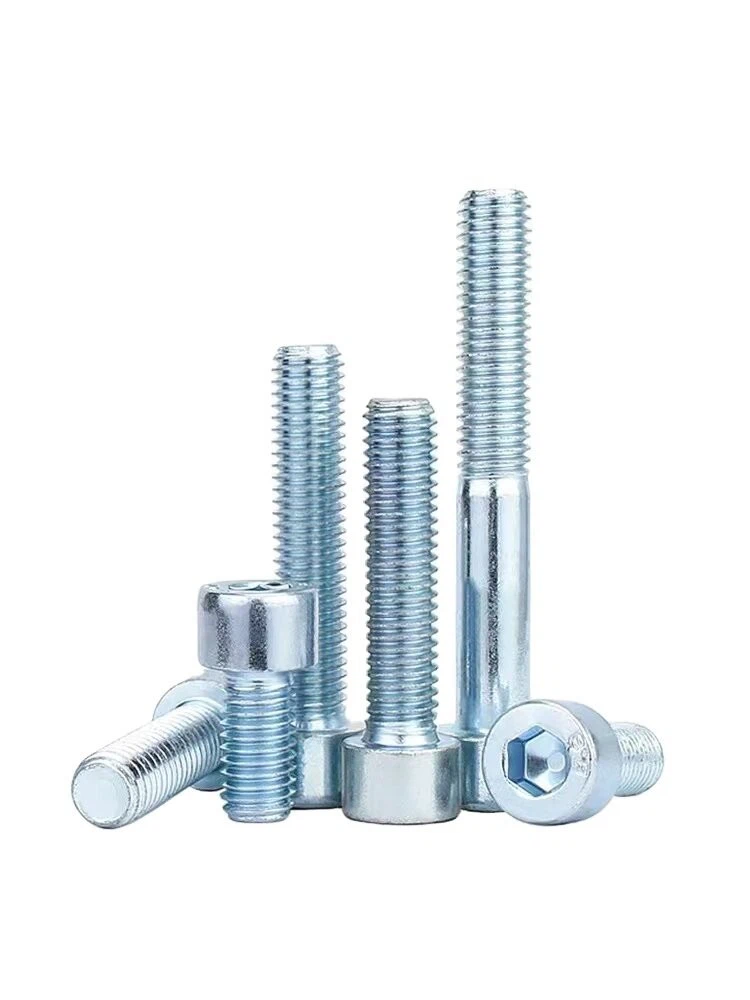

The DIN912 Hexagonal Bolt is another common type. DIN912 is a standard that specifies the dimensions and properties of these bolts. They can be made from different materials, but when it comes to carbon steel DIN912 bolts, the yield strength can be around 320 - 400 MPa. Alloy steel DIN912 bolts can have a much higher yield strength, similar to the 10.9 grade bolts.
How to Choose the Right Bolt Based on Yield Strength
So, how do you choose the right inner hexagon bolt for your project? Well, the first step is to figure out the maximum stress that the bolt will be subjected to. This involves looking at the load it will carry, the forces acting on it, and the environmental conditions.
Once you have an idea of the required stress, you can compare it with the yield strength of different bolts. It's a good idea to add a safety factor. This means choosing a bolt with a yield strength that's higher than the calculated maximum stress. A common safety factor is around 1.5 - 2, but it can vary depending on the application.
If you're not sure about the calculations or which bolt to choose, don't worry. That's where I come in. As an inner hexagon bolt supplier, I've got the knowledge and experience to help you make the right decision.
Conclusion
In a nutshell, yield strength is a crucial property of inner hexagon bolts. It determines how much stress they can handle before permanent deformation occurs. By understanding the factors that affect yield strength and knowing how to choose the right bolt for your application, you can ensure the safety and reliability of your projects.
If you're in the market for inner hexagon bolts, whether it's the Half Tooth Cylindrical Cup Head Bolt, 10.9 Grade Hexagonal Bolt, or DIN912 Hexagonal Bolt, I'm here to assist you. Just reach out, and we can have a chat about your requirements. Let's work together to find the perfect bolts for your needs.
References
- Machinery's Handbook, 31st Edition
- ASTM Standards for Fasteners
- DIN Standards for Bolts and Screws