

What is the yield strength of a heavy hex nut?
Nov 20, 2025
Leave a message
Hey there! As a supplier of Heavy Hex Nuts, I often get asked about the yield strength of these little but crucial components. So, I thought I'd write this blog to shed some light on what yield strength means for heavy hex nuts and why it matters.
First off, let's talk about what yield strength is. In simple terms, yield strength is the maximum stress that a material can withstand without undergoing permanent deformation. When a heavy hex nut is tightened onto a bolt, it experiences stress. If this stress goes beyond the yield strength, the nut will start to deform, and it won't be able to perform its function properly.
For heavy hex nuts, yield strength is super important. These nuts are used in a wide range of applications, from construction to machinery. In construction, they're used to hold together structural elements. If the nuts don't have sufficient yield strength, they might deform under the weight and pressure of the structure, leading to potential safety hazards. In machinery, heavy hex nuts are used to secure moving parts. A nut with low yield strength could deform during operation, causing the machinery to malfunction.

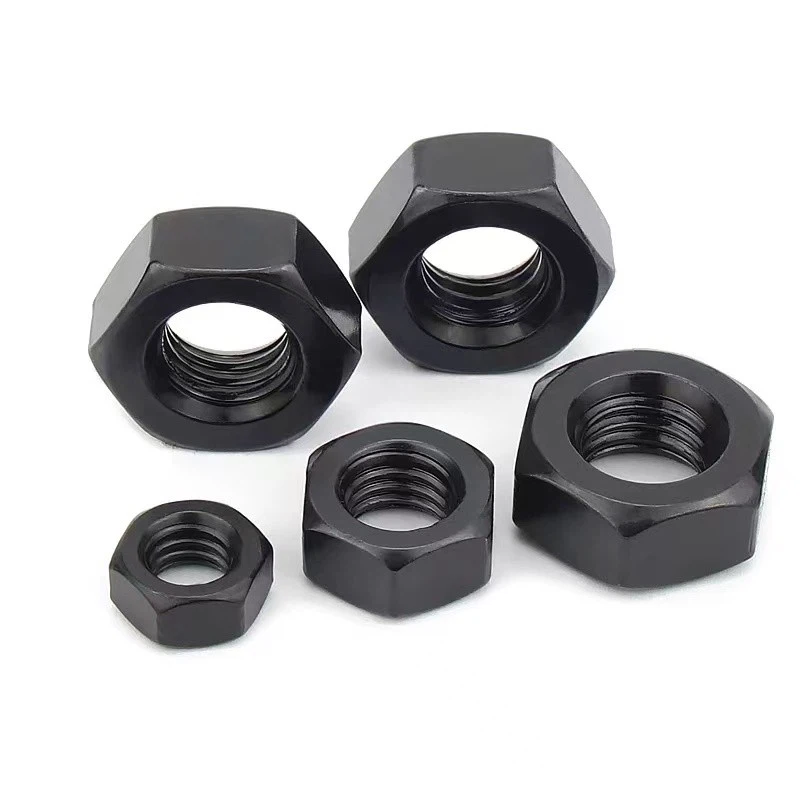
Now, the yield strength of heavy hex nuts can vary depending on several factors. One of the main factors is the material they're made from. Heavy hex nuts can be made from different materials, such as carbon steel, stainless steel, and alloy steel. Each material has its own unique properties, which affect the yield strength.
Carbon steel is one of the most commonly used materials for heavy hex nuts. It's relatively inexpensive and has good strength properties. The yield strength of carbon steel heavy hex nuts typically ranges from around 220 MPa to 550 MPa, depending on the grade of the steel. For example, a low - grade carbon steel nut might have a yield strength of around 220 MPa, while a high - grade one could reach up to 550 MPa.
Stainless steel heavy hex nuts are another popular choice, especially in applications where corrosion resistance is important. Stainless steel has a higher yield strength compared to some grades of carbon steel. The yield strength of stainless steel heavy hex nuts can range from about 205 MPa to 485 MPa. This makes them suitable for use in harsh environments, such as marine or chemical processing plants.
Alloy steel heavy hex nuts are known for their high strength and toughness. They're often used in high - stress applications, like in the automotive or aerospace industries. The yield strength of alloy steel heavy hex nuts can be quite high, sometimes exceeding 690 MPa. This makes them capable of withstanding extreme loads without deforming.
Another factor that affects the yield strength of heavy hex nuts is the manufacturing process. Nuts that are forged generally have higher yield strength compared to those that are machined. Forging involves shaping the metal under high pressure, which aligns the grain structure of the metal and improves its strength. Machined nuts, on the other hand, are cut from a solid piece of metal, and their grain structure might not be as well - aligned, resulting in slightly lower yield strength.
When it comes to standards and specifications, there are several industry standards that define the requirements for heavy hex nuts, including yield strength. For example, ASTM A194 is a standard specification for high - strength nuts used with high - strength bolts in structural steel joints. This standard specifies the minimum yield strength for different grades of nuts. Similarly, ISO 4032 is an international standard that covers hexagon nuts with metric fine pitch threads. It also has requirements for the mechanical properties, including yield strength, of the nuts.
As a supplier of heavy hex nuts, I always make sure that the nuts I offer meet or exceed the relevant industry standards. We test our nuts regularly to ensure that they have the appropriate yield strength. We use advanced testing equipment, such as tensile testing machines, to measure the yield strength accurately. This way, our customers can be confident that the nuts they're buying will perform as expected in their applications.
Now, let me tell you a bit about some of the specific types of heavy hex nuts we offer. We have the DIN934 Hex Nut. These nuts are widely used in European and international markets. They're made from high - quality materials and have a good yield strength. Whether you're working on a small DIY project or a large - scale industrial construction, the DIN934 hex nuts are a reliable choice.
We also offer 22mm Hex Nut. These nuts are a popular size and are used in many different applications. They're available in different materials, so you can choose the one that best suits your needs in terms of yield strength and corrosion resistance.
Of course, our Heavy Hex Nut range is the star of the show. We have a wide variety of heavy hex nuts in different sizes, materials, and grades. Whether you need a nut with a low yield strength for a light - duty application or a high - yield strength nut for a high - stress job, we've got you covered.
If you're in the market for heavy hex nuts, it's important to consider the yield strength carefully. Don't just go for the cheapest option, as a nut with low yield strength might end up costing you more in the long run if it fails. Make sure you choose a nut that has the appropriate yield strength for your specific application.
If you have any questions about the yield strength of heavy hex nuts or need help choosing the right nut for your project, feel free to reach out. We're here to assist you and make sure you get the best - quality heavy hex nuts for your needs. Whether you're a contractor, a mechanic, or a DIY enthusiast, we can provide you with the right nuts at a competitive price. So, don't hesitate to contact us for a quote or to discuss your requirements. We look forward to working with you and helping you find the perfect heavy hex nuts for your next project.
References:
- ASTM International. ASTM A194 Standard Specification for High - Strength Nuts for Structural Steel Joints.
- International Organization for Standardization. ISO 4032 Hexagon Nuts with Metric Fine Pitch Threads.