

What is the tolerance range of a Hex Flange Lock Nut?
Jul 15, 2025
Leave a message
Hey there! As a supplier of Hex Flange Lock Nut, I often get asked about the tolerance range of these nuts. So, I thought I'd write this blog to share some insights on that topic.
First off, let's understand what a Hex Flange Lock Nut is. It's a type of nut with a flange at one end, which serves as an integrated washer. This flange helps distribute the load over a larger area, reducing the risk of the nut loosening due to vibration or other external forces. The locking feature can come in different forms, like nylon inserts or deformed threads, which prevent the nut from backing off easily.
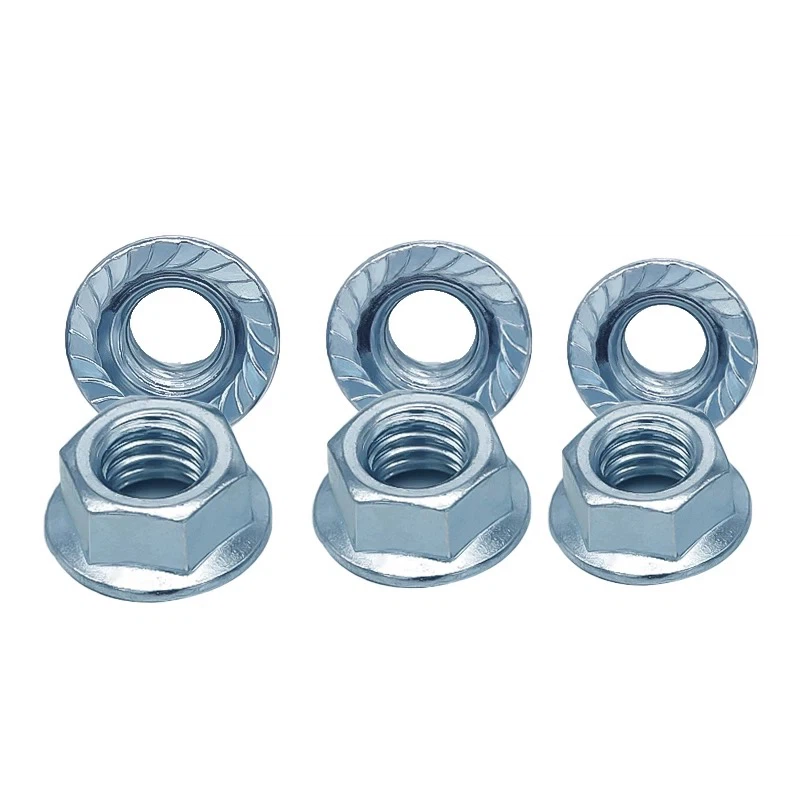

Now, onto the tolerance range. Tolerance is basically the allowable variation in the dimensions of a part. For Hex Flange Lock Nuts, there are several key dimensions that have specific tolerance ranges.
Thread Tolerance
The most critical dimension of a nut is its thread. Thread tolerance ensures that the nut can properly engage with the corresponding bolt. In the metric system, thread tolerances are defined by standards like ISO 965. For example, a common thread tolerance for a Hex Flange Lock Nut might be 6H. The number 6 indicates the tolerance grade, and the letter H is for internal threads (nuts). A 6H tolerance means that the pitch diameter and major diameter of the nut's thread have a specified range of acceptable sizes.
In the imperial system, the Unified Thread Standard (UTS) is used. For nuts, a common thread tolerance is 2B. This also defines the acceptable variations in the thread dimensions. The thread tolerance is crucial because if it's too loose, the nut might not hold securely on the bolt, and if it's too tight, it could be difficult to install or might damage the threads.
Flange Dimensions
The flange of a Hex Flange Lock Nut also has tolerance requirements. The outer diameter of the flange should be within a certain range. If the flange is too small, it won't distribute the load effectively, and if it's too large, it might interfere with other components in the assembly. The thickness of the flange is another dimension with a tolerance. A consistent flange thickness ensures proper seating and load distribution.
Height Tolerance
The height of the nut is also important. It affects the overall length of the fastener assembly and the amount of thread engagement. There's a tolerance range for the height of the Hex Flange Lock Nut. If the nut is too tall, it might not fit in the intended space, and if it's too short, there might not be enough thread engagement to provide a secure connection.
Material and Finish Considerations
The tolerance range can also be affected by the material and finish of the nut. For example, 8 Grade Galvanized Flange Nut has a specific strength requirement due to its grade. The galvanized finish adds a layer of protection against corrosion but can also slightly affect the dimensions. The thickness of the galvanized coating has its own tolerance, which needs to be considered when determining the overall tolerance of the nut.
Why Tolerance Matters
You might be wondering why all these tolerance ranges are so important. Well, in any mechanical assembly, the proper fit and function of components are crucial. If the Hex Flange Lock Nut doesn't meet the required tolerance, it can lead to a whole host of problems. Loose nuts can cause vibrations, which can damage other parts of the assembly over time. Tight nuts can make installation difficult and might even strip the threads.
In industries like automotive, aerospace, and construction, where safety is a top priority, the correct tolerance of fasteners is non - negotiable. A faulty nut could potentially lead to a catastrophic failure, so getting the tolerance right is essential.
How We Ensure Tolerance
As a supplier, we take several steps to ensure that our Hex Flange Lock Nut meets the required tolerance ranges. We use high - precision manufacturing equipment. Our machines are calibrated regularly to ensure accurate production. During the manufacturing process, we perform in - process inspections. This means that at various stages of production, we measure the dimensions of the nuts to make sure they're within the acceptable range.
After production, we conduct final inspections using advanced measuring tools like calipers, micrometers, and thread gauges. These tools allow us to measure the thread, flange dimensions, and height with great accuracy. We also have a quality control team that checks a sample of each batch of nuts to ensure that they meet the specified standards.
Different Applications and Tolerance Requirements
The tolerance requirements can vary depending on the application. For example, in a simple household DIY project, the tolerance requirements might be less strict. You can probably get away with a slightly looser or tighter nut without any major consequences. However, in a high - performance racing car engine, every component needs to be within very tight tolerances.
In the case of 16 Flange Nut, which might be used in heavy - duty machinery or industrial applications, the tolerance requirements are usually more stringent. The machinery often operates under high loads and vibrations, so the nuts need to be precisely manufactured to ensure a reliable connection.
Conclusion
So, there you have it! The tolerance range of a Hex Flange Lock Nut is a complex but important aspect of its design and manufacturing. It encompasses thread dimensions, flange dimensions, height, and is also affected by the material and finish. As a supplier, we're committed to providing high - quality nuts that meet the required tolerance ranges.
If you're in the market for Hex Flange Lock Nuts or have any questions about their tolerance or other specifications, don't hesitate to reach out. We're here to help you find the right nuts for your specific application. Whether it's a small - scale project or a large - scale industrial application, we can provide the nuts that meet your needs. Let's start a conversation and see how we can work together to ensure your projects are a success.
References
- ISO 965: ISO metric screw threads -- Tolerances
- Unified Thread Standard (UTS) documentation