

What is the standard diameter of outer hexagon bolts?
Dec 30, 2025
Leave a message
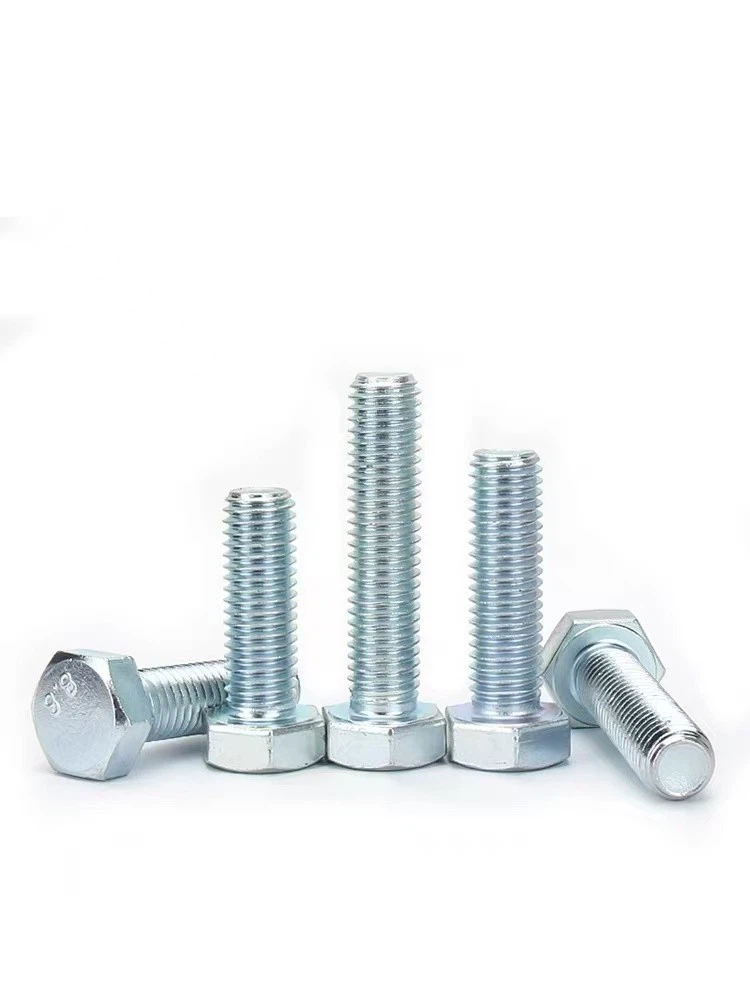
As a seasoned supplier of outer hexagon bolts, I've encountered numerous inquiries regarding the standard diameter of these essential fasteners. Outer hexagon bolts, known for their versatility and strength, are widely used in various industries, from construction to automotive manufacturing. Understanding the standard diameters is crucial for ensuring the proper fit and performance of these bolts in different applications.
Industry Standards and Their Impact on Bolt Diameters
The standard diameter of outer hexagon bolts is primarily determined by international and national standards. These standards ensure consistency and compatibility across different products and industries. Some of the most well - known standards include DIN (Deutsches Institut für Normung) in Germany and GB (Guobiao) in China.
DIN Standards
The DIN standards are highly respected in the global market. For example, the DIN933 Full Tooth External Hex Bolt and DIN931 Hex Bolt have specific diameter requirements. DIN933 bolts are full - threaded, while DIN931 bolts have a partial thread.
The diameter range for DIN933 and DIN931 bolts typically starts from M3 (3mm in diameter) and goes up to M64. The most commonly used diameters in industrial applications are M6, M8, M10, M12, M16, M20, and M24. These diameters are carefully selected to balance strength, load - bearing capacity, and ease of installation. For instance, M6 bolts are often used in light - duty applications such as electronics or small machinery, where a smaller and less - powerful fastener is sufficient. On the other hand, M24 bolts are commonly found in heavy - duty construction and machinery, where high strength and load - bearing capacity are required.
GB Standards
In China, the GB standards play a significant role in defining the specifications of outer hexagon bolts. The GB5783 Hex Bolt is a full - threaded hexagon bolt that is widely used in both domestic and international markets. The diameter range for GB5783 bolts is similar to that of DIN bolts, starting from M3 and going up to M64.
GB standards also specify tolerances for bolt diameters. These tolerances ensure that the bolts can be used interchangeably within a certain range, providing flexibility in manufacturing and assembly processes. For example, a bolt with a nominal diameter of M10 may have a tolerance of ±0.1mm, which means that the actual diameter of the bolt can vary between 9.9mm and 10.1mm. This tolerance range is carefully calculated to ensure that the bolt can still fit properly into the corresponding nut or threaded hole.
Factors Influencing the Choice of Bolt Diameter
Load Requirements
One of the most important factors in determining the appropriate bolt diameter is the load that the bolt will need to bear. In applications where high loads are expected, such as in bridge construction or heavy machinery, larger diameter bolts are required. The cross - sectional area of the bolt is directly related to its strength. A larger diameter bolt has a greater cross - sectional area, which means it can withstand higher tensile and shear forces.
For example, in a bridge joint, the bolts need to hold the structural members together under the weight of the bridge and the traffic passing over it. If a smaller diameter bolt is used, it may not be able to withstand the loads, leading to bolt failure and potential structural collapse. On the other hand, using an overly large diameter bolt can be wasteful and may add unnecessary weight to the structure.
Space Constraints
Another factor to consider is the available space for the bolt. In some applications, such as in compact machinery or electronic devices, there may be limited space for installing bolts. In these cases, smaller diameter bolts are preferred. However, it's important to ensure that the smaller diameter bolts still meet the load requirements of the application.
For instance, in a smartphone, the internal components are held together by small bolts. These bolts need to be small enough to fit within the limited space of the device while still providing sufficient strength to hold the components in place.
Assembly and Disassembly Requirements
The ease of assembly and disassembly is also a consideration when choosing the bolt diameter. Larger diameter bolts may require more torque to tighten and loosen, which can be a challenge in some applications. In addition, larger bolts may be more difficult to handle and install in tight spaces.
On the other hand, smaller diameter bolts are generally easier to handle and install. However, they may require more precise tools and techniques to ensure proper tightening. For example, in a delicate electronic device, using a small diameter bolt may require the use of a precision screwdriver to avoid over - tightening or damaging the components.
Quality Control and Standard Diameters
As a supplier of outer hexagon bolts, quality control is of utmost importance. We have a strict quality control system in place to ensure that all our bolts meet the relevant standards for diameter and other specifications.
Our manufacturing process starts with the selection of high - quality raw materials. We use only the best steel grades that are suitable for the specific application of the bolts. During the manufacturing process, we use advanced machining techniques to ensure accurate and consistent bolt diameters.

We also conduct regular inspections and tests on our bolts. This includes measuring the diameter of the bolts using precision measuring instruments such as micrometers and calipers. We compare the measured values with the standard values specified by the relevant standards to ensure that the bolts are within the acceptable tolerance range.
In addition to diameter measurements, we also test the bolts for other properties such as hardness, tensile strength, and corrosion resistance. These tests ensure that our bolts are of high quality and can perform reliably in various applications.
Conclusion
In conclusion, the standard diameter of outer hexagon bolts is determined by international and national standards, and it ranges from M3 to M64. The choice of bolt diameter depends on several factors, including load requirements, space constraints, and assembly and disassembly requirements. As a supplier, we are committed to providing high - quality outer hexagon bolts that meet the relevant standards and customer requirements.
If you are in need of outer hexagon bolts for your project, whether it's a small - scale DIY project or a large - scale industrial application, we are here to help. We can provide you with detailed information about our products, including the available diameters, materials, and finishes. Please feel free to contact us for more information and to discuss your specific requirements. Our team of experts will be happy to assist you in finding the right bolts for your needs.
References
- "Mechanical Fasteners Handbook"
- DIN Standards Documentation
- GB Standards Documentation