

What is the minimum temperature a flange nut can withstand?
Jul 25, 2025
Leave a message
What is the minimum temperature a flange nut can withstand?
As a professional flange nut supplier, I often encounter inquiries from customers regarding the performance of flange nuts under various environmental conditions. One of the most frequently asked questions is about the minimum temperature a flange nut can withstand. In this blog post, I will delve into this topic and provide you with a comprehensive understanding of the factors influencing the low - temperature performance of flange nuts.
Factors Affecting the Minimum Temperature Resistance of Flange Nuts
Material Composition
The material from which a flange nut is made plays a crucial role in determining its minimum temperature tolerance. Different metals have different crystal structures and thermal properties, which affect their behavior at low temperatures.
- Carbon Steel: Carbon steel is a commonly used material for flange nuts. At low temperatures, carbon steel can become brittle. The transition temperature, below which the steel's ductility decreases significantly and the risk of brittle fracture increases, depends on the carbon content and the presence of other alloying elements. For general - purpose carbon steel flange nuts, the minimum operating temperature might be around - 20°C to - 40°C. As the temperature drops further, the steel loses its ability to deform plastically, and small cracks can propagate rapidly, leading to failure.
- Stainless Steel: Stainless steel, especially austenitic stainless steels like 304 and 316, has better low - temperature performance compared to carbon steel. Austenitic stainless steels have a face - centered cubic (FCC) crystal structure, which remains ductile at very low temperatures. Flange nuts made from these materials can typically withstand temperatures as low as - 200°C. This makes them suitable for applications in cryogenic environments, such as in the aerospace and refrigeration industries.
- Alloy Steel: Alloy steels are designed by adding specific alloying elements to improve their mechanical properties. Some alloy steels are formulated to have excellent low - temperature toughness. For example, nickel - alloyed steels can maintain their strength and ductility at extremely low temperatures. The minimum temperature that alloy steel flange nuts can withstand depends on the exact alloy composition but can range from - 50°C to - 150°C or even lower in some specialized cases.
Heat Treatment
Heat treatment processes can significantly alter the microstructure and properties of flange nuts, thereby affecting their low - temperature performance.

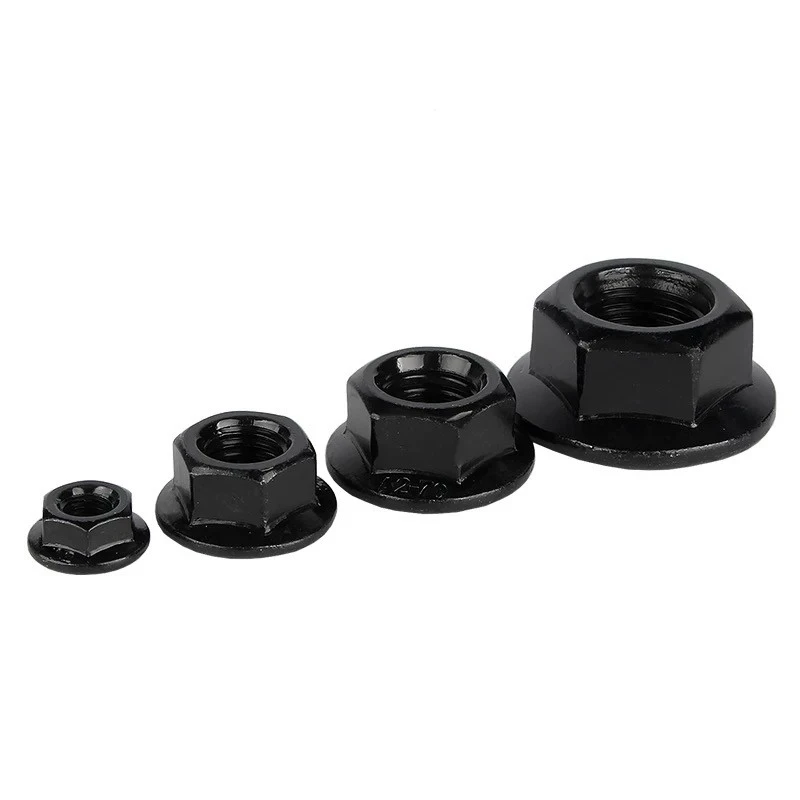
- Quenching and Tempering: Quenching and tempering is a common heat treatment for carbon and alloy steel flange nuts. Quenching rapidly cools the nut from a high temperature, which creates a hard and brittle martensitic structure. Tempering then reheats the nut to a lower temperature to reduce the brittleness and improve toughness. Properly quenched and tempered flange nuts can have better low - temperature resistance compared to non - heat - treated nuts. However, if the heat treatment is not carried out correctly, it can lead to internal stresses and microstructural defects that may reduce the nut's ability to withstand low temperatures.
- Annealing: Annealing is a heat treatment process that involves heating the nut to a specific temperature and then slowly cooling it. This process relieves internal stresses and refines the grain structure, improving the nut's ductility. Annealed flange nuts may have better low - temperature performance as they are less prone to brittle fracture.
Surface Coating
Surface coatings not only protect flange nuts from corrosion but can also influence their low - temperature behavior.
- Zinc Coating: Galvanized flange nuts, such as the 8 Grade Galvanized Flange Nut, have a zinc coating that provides a sacrificial layer to prevent the underlying steel from rusting. At low temperatures, the zinc coating can become more brittle, but it generally does not significantly affect the overall low - temperature performance of the nut. However, if the coating is too thick or has defects, it may lead to cracking at low temperatures, which could potentially expose the steel to corrosion.
- Other Coatings: Some specialized coatings, such as epoxy or PTFE coatings, can provide additional protection and may also affect the nut's low - temperature performance. Epoxy coatings can improve the nut's resistance to chemical attack and may also have some insulating properties, which could help in maintaining the nut's temperature in cold environments.
Applications and Temperature Requirements
The minimum temperature requirements for flange nuts vary depending on the application.
- Automotive Industry: In automotive applications, flange nuts are used in various components. In normal operating conditions, the temperature range is usually between - 20°C and 120°C. However, in regions with extremely cold winters, the minimum temperature can drop well below - 20°C. For example, in Arctic regions, carbon steel flange nuts may need to be replaced with stainless steel or alloy steel ones to ensure reliable performance.
- Aerospace Industry: The aerospace industry often operates in extreme environments. Aircraft components, especially those exposed to high altitudes, can experience very low temperatures. For example, at cruising altitudes, the outside temperature can be as low as - 50°C to - 60°C. Flange nuts used in aerospace applications are typically made from high - strength alloys or stainless steels to withstand these low temperatures and maintain their structural integrity.
- Refrigeration and Cryogenic Industries: In refrigeration systems and cryogenic applications, flange nuts are exposed to extremely low temperatures. For instance, in liquid nitrogen storage tanks, the temperature can reach - 196°C. Hex Flange Lock Nut made from austenitic stainless steel or specialized cryogenic alloys are commonly used in these applications to ensure that the nuts do not fail due to brittle fracture.
Testing and Quality Assurance
To ensure that flange nuts can withstand the required minimum temperatures, various testing methods are employed.
- Charpy Impact Testing: This test measures the energy absorbed by a notched specimen during impact loading at a specific temperature. By conducting Charpy impact tests at different low temperatures, the ductile - to - brittle transition temperature of the flange nut material can be determined. Flange nuts that pass the Charpy impact test at the required minimum temperature are considered suitable for use in low - temperature applications.
- Tensile Testing: Tensile testing is used to measure the strength and ductility of flange nuts at low temperatures. By subjecting the nuts to a uniaxial tensile load at different temperatures, the changes in their mechanical properties can be evaluated. This helps in determining whether the nuts can maintain their clamping force and structural integrity at low temperatures.
Conclusion
In conclusion, the minimum temperature a flange nut can withstand depends on multiple factors, including material composition, heat treatment, surface coating, and the specific application requirements. As a flange nut supplier, we offer a wide range of flange nuts, such as 22mm Flange Nut, made from different materials to meet the diverse needs of our customers. Whether you are in the automotive, aerospace, or cryogenic industry, we can provide you with the right flange nuts that can perform reliably at the required minimum temperatures.
If you are interested in purchasing flange nuts or have any questions regarding their low - temperature performance, please feel free to contact us. We are more than happy to discuss your specific requirements and provide you with the best solutions.
References
- ASM Handbook, Volume 1: Properties and Selection: Irons, Steels, and High - Performance Alloys. ASM International.
- ASTM Standards for Fasteners. ASTM International.
- "Materials Science and Engineering: An Introduction" by William D. Callister Jr. and David G. Rethwisch.