

What is the impact resistance of outer hexagon bolts?
Dec 26, 2025
Leave a message
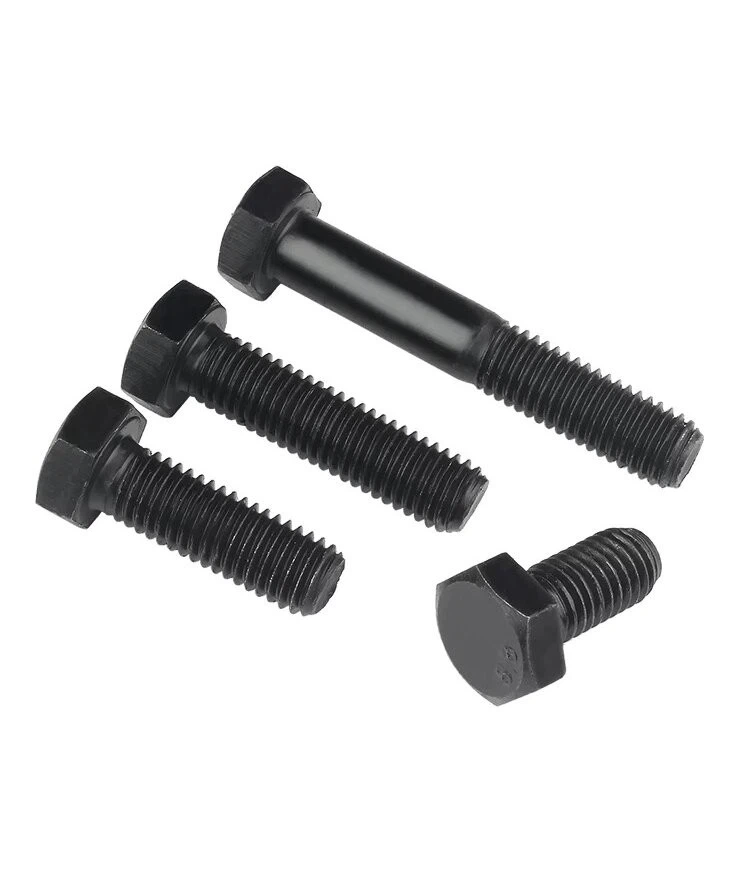
As a seasoned supplier of outer hexagon bolts, I've witnessed firsthand the critical role these seemingly simple components play in countless industrial applications. One question that frequently arises among our customers is about the impact resistance of outer hexagon bolts. In this blog post, I'll delve into the technical aspects of impact resistance, discuss key factors influencing it, and highlight how our range of products, such as 8.8 Grade Hex Bolt, DIN931 Hex Bolt, and GB5783 Hex Bolt, are engineered to meet different impact - resistant requirements.
Understanding Impact Resistance
Impact resistance refers to a bolt's ability to withstand sudden loads or shocks without deformation, fracture, or failure. In applications where machinery experiences vibrations, sudden stops, or dynamic forces, the impact resistance of the bolts becomes crucial.
When an outer hexagon bolt is subjected to an impact load, its material properties determine how it will respond. The energy absorbed by the bolt during the impact is a measure of its impact - resistant capacity. A bolt with high impact resistance can absorb more energy before reaching its failure point.
Key Factors Affecting Impact Resistance
Material Composition
The choice of material is one of the most significant factors in determining a bolt's impact resistance. For instance, alloy steels are often used in high - impact applications. These steels contain elements like chromium, nickel, and molybdenum, which enhance their toughness and strength. Our 8.8 Grade Hex Bolt is made from high - quality alloy steel, offering excellent impact resistance suitable for heavy - duty machinery.
In contrast, carbon steels have lower impact resistance compared to alloy steels. However, they are still widely used in applications where the impact loads are relatively low. Selecting the right material based on the specific impact requirements is essential to ensure the long - term performance of the bolted joint.
Heat Treatment
Heat treatment processes such as quenching and tempering can significantly improve the impact resistance of outer hexagon bolts. Quenching rapidly cools the bolt from a high temperature, increasing its hardness. Tempering then follows, reducing the internal stresses generated during quenching and improving the material's toughness.
For our DIN931 Hex Bolt, we employ precision heat - treatment methods. This ensures that the bolts have the right balance of hardness and toughness, making them capable of withstanding significant impact forces without compromising their structural integrity.
Bolt Design
The design of the outer hexagon bolt also plays a role in its impact resistance. The thread pitch, head shape, and shank diameter can all affect how the bolt distributes the impact load. A well - designed bolt will evenly distribute the stress across its body, reducing the likelihood of stress concentration points that could lead to failure.
Our GB5783 Hex Bolt is designed with optimized thread profiles and head geometries. This design not only enhances its installation ease but also improves its ability to handle impact loads effectively.
Testing Impact Resistance
To ensure the quality and reliability of our outer hexagon bolts, we conduct rigorous impact - resistance testing. One common method is the Charpy impact test, where a notched bolt specimen is struck with a pendulum, and the energy absorbed during the fracture is measured. This energy value is a direct indication of the bolt's impact resistance.

We also perform real - world simulations, subjecting our bolts to impact loads similar to those encountered in actual industrial applications. By analyzing the performance of the bolts under these conditions, we can fine - tune our manufacturing processes and material selections to meet or exceed the highest industry standards.
Applications and Impact Requirements
The impact requirements of outer hexagon bolts vary widely depending on the application. In automotive manufacturing, for example, bolts used in engine components, suspension systems, and braking systems must have high impact resistance to withstand the extreme forces and vibrations during vehicle operation.
In construction, bolts used in structural steel connections need to be able to handle dynamic loads caused by wind, earthquakes, or moving equipment. Our 8.8 Grade Hex Bolt is well - suited for these high - stress construction applications due to its superior impact - resistant properties.
In the machinery industry, where equipment may experience sudden starts and stops, the impact resistance of the bolts is crucial for maintaining the integrity of the machine. Our DIN931 Hex Bolt and GB5783 Hex Bolt are popular choices for various machinery applications, providing reliable performance under impact - prone conditions.
Our Commitment to Quality
As a supplier, we are committed to providing outer hexagon bolts with the highest level of impact resistance. We source only the best raw materials and use state - of - the - art manufacturing and testing equipment. Our team of experienced engineers and technicians continuously monitors the production process to ensure that each bolt meets our strict quality standards.
We understand that the performance of your equipment depends on the quality of the bolts you use. That's why we offer a wide range of outer hexagon bolts, including different grades, sizes, and materials, to meet the diverse impact - resistant requirements of our customers.
Contact Us for Your Outer Hexagon Bolt Needs
If you're looking for high - quality outer hexagon bolts with excellent impact resistance, look no further. Whether you need 8.8 Grade Hex Bolt, DIN931 Hex Bolt, or GB5783 Hex Bolt, our team is ready to assist you. Contact us to discuss your specific requirements, and let's work together to find the perfect solution for your application.
References
- "Mechanical Fasteners: Design, Materials, and Applications" by Walter H. Bilek.
- ASTM International Standards on Bolts and Fasteners.
- Machinery's Handbook, 31st Edition.