

What are the customization options for outer hexagon bolts?
Jul 30, 2025
Leave a message
As a seasoned supplier of outer hexagon bolts, I am thrilled to share with you the extensive customization options available in this realm. Outer hexagon bolts are a staple in various industries, from construction to automotive, and the ability to customize them can significantly enhance their performance and suitability for specific applications.
Material Selection
The choice of material is a fundamental aspect of customizing outer hexagon bolts. Different materials offer distinct properties such as strength, corrosion resistance, and heat resistance.
Stainless Steel
Stainless steel is a popular choice due to its excellent corrosion resistance. It contains chromium, which forms a passive oxide layer on the surface, protecting the bolt from rust and oxidation. This makes it ideal for outdoor applications or environments with high humidity. For example, in marine construction, where bolts are constantly exposed to saltwater, stainless steel outer hexagon bolts ensure long - term durability.
Carbon Steel
Carbon steel bolts are known for their high strength. They are commonly used in structural applications where heavy loads need to be supported. The carbon content in the steel can be adjusted to achieve different levels of hardness and strength. For instance, high - carbon steel bolts are stronger but more brittle, while low - carbon steel bolts are more ductile.
Alloy Steel
Alloy steel bolts are created by adding various alloying elements such as manganese, nickel, and chromium to carbon steel. These additions enhance the bolt's mechanical properties, including strength, toughness, and wear resistance. Alloy steel bolts are often used in high - stress applications, such as in the automotive and aerospace industries.
Size and Dimensions
Customizing the size and dimensions of outer hexagon bolts is crucial to meet the specific requirements of different projects.
Diameter
The diameter of the bolt can vary widely, from small diameters used in electronics and precision machinery to large diameters for heavy - duty construction. For example, a UNC American Hex Bolt may come in a range of diameters to fit different nuts and holes.
Length
The length of the bolt is determined by the thickness of the materials being joined. In construction, longer bolts may be required to penetrate through multiple layers of building materials. Custom - length bolts ensure a secure and proper fit, preventing loosening and potential structural failures.
Thread Pitch
The thread pitch refers to the distance between adjacent threads. Different applications may require different thread pitches. Coarse threads are generally used for quick assembly and disassembly, while fine threads provide better holding power in soft materials or in applications where precise adjustment is needed.
Head Style and Finish
The head style and finish of outer hexagon bolts not only affect their appearance but also their functionality.
Head Style
The standard outer hexagon head provides a large surface area for tools to grip, allowing for easy tightening and loosening. However, there are also other head styles available, such as socket head cap screws, which are used in applications where a low - profile head is required.
Finish
The finish of the bolt can enhance its corrosion resistance and aesthetics. Common finishes include zinc plating, which provides a thin layer of zinc to protect the bolt from rust. Another popular finish is hot - dip galvanizing, which creates a thicker and more durable zinc coating. For a more decorative look, bolts can be powder - coated in various colors.
Grade and Strength
The grade of a bolt indicates its strength and quality.
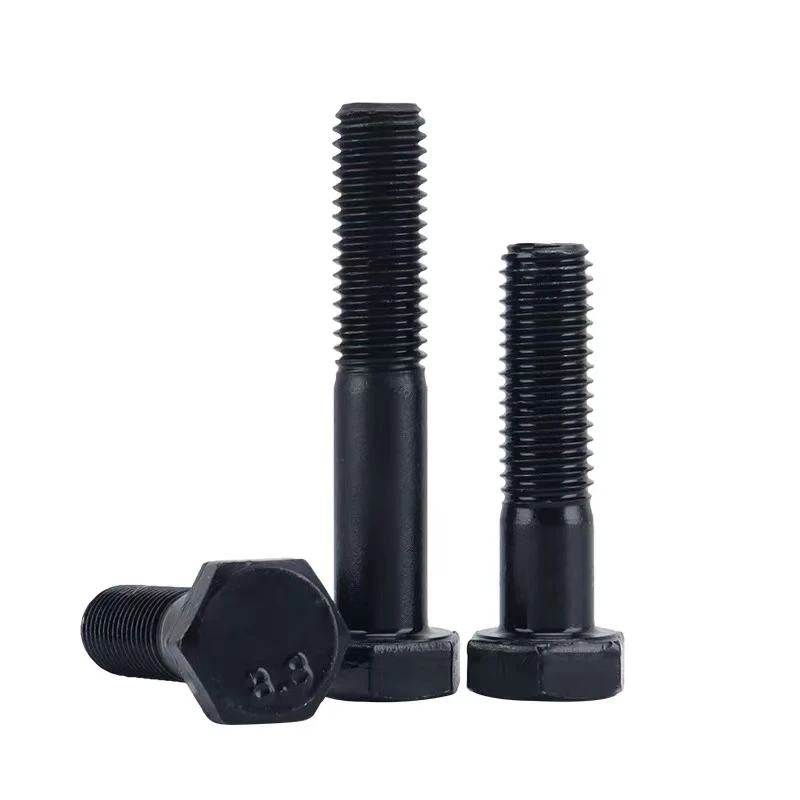
8.8 Grade Hex Bolt
An 8.8 Grade Hex Bolt is a medium - strength bolt commonly used in general engineering applications. It has a minimum tensile strength of 800 MPa and a yield strength of 640 MPa. This grade of bolt is suitable for a wide range of applications, from machinery assembly to structural connections.
Higher Grades
Higher - grade bolts, such as 10.9 and 12.9, offer even greater strength. These bolts are used in critical applications where high loads and stresses are expected, such as in automotive engines and heavy - machinery components.
Special Features
In addition to the basic customization options, there are also special features that can be added to outer hexagon bolts.

Flange Bolts
Flange bolts have a built - in washer - like flange under the head. This flange distributes the load over a larger area, reducing the risk of damage to the connected materials. Flange bolts are commonly used in automotive and plumbing applications.
DIN933 Full Tooth External Hex Bolt
A DIN933 Full Tooth External Hex Bolt is a type of bolt that follows the DIN 933 standard. It has a full - threaded shank, which provides more engagement with the nut and greater holding power. These bolts are widely used in European and international projects.
Anti - Loosening Features
Some bolts are designed with anti - loosening features, such as nylon - inserted lock nuts or serrated flanges. These features prevent the bolt from vibrating loose over time, ensuring the long - term stability of the connection.
In conclusion, the customization options for outer hexagon bolts are vast and diverse. Whether you need a specific material, size, strength, or special feature, there is a solution available to meet your exact requirements. As a supplier, I am committed to providing high - quality customized outer hexagon bolts to our customers. If you are in need of outer hexagon bolts for your project, I encourage you to reach out to discuss your specific needs. Our team of experts is ready to assist you in finding the perfect bolt solution.
References
- Machinery's Handbook, 31st Edition
- ASTM International Standards for Fasteners
- ISO Standards for Bolts and Nuts