

How to measure the pre - load of UNC American Hex Bolts?
Jul 07, 2025
Leave a message
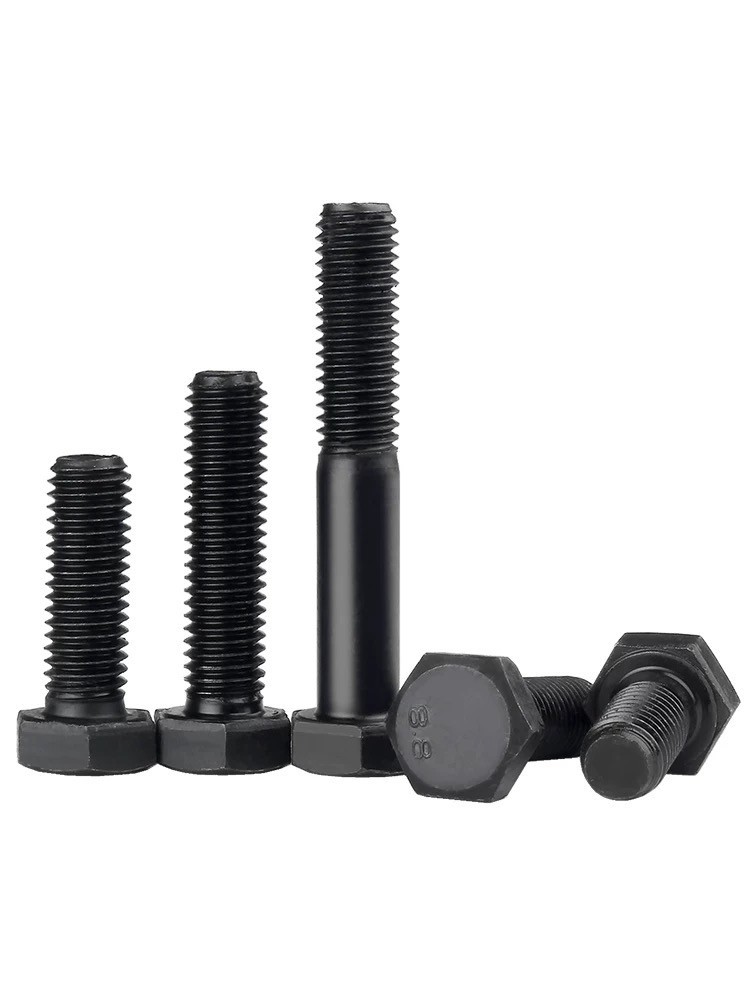
As a supplier of UNC American Hex Bolts, I understand the critical importance of measuring the pre - load of these bolts accurately. Pre - load is the tension created in a bolt when it is tightened, and it plays a vital role in ensuring the structural integrity and safety of assemblies. In this blog, I will share some effective methods for measuring the pre - load of UNC American Hex Bolts.
1. Theoretical Background
Before delving into the measurement methods, it's essential to understand the basic theory behind bolt pre - load. When a UNC American Hex Bolt is tightened, a clamping force is generated between the connected parts. This clamping force must be sufficient to resist external loads such as vibration, shear, and tension. The pre - load is directly related to the torque applied during tightening, the friction coefficient between the bolt and the nut, and the thread pitch.
The relationship between torque (T), pre - load (F), and other factors can be expressed by the following formula: (T = K \times F\times d), where (K) is the torque coefficient, which takes into account friction and other factors, (F) is the pre - load, and (d) is the nominal diameter of the bolt.
2. Measuring Methods
2.1 Torque Method
The torque method is one of the most commonly used ways to estimate bolt pre - load. It involves tightening the UNC American Hex Bolt to a specified torque value. The torque value is usually determined based on the bolt's size, material, and the application requirements.
To use the torque method effectively, you need to know the torque coefficient ((K)). This coefficient can vary depending on factors such as the surface finish of the bolt and nut, the presence of lubrication, and the type of washer used. For a well - lubricated UNC American Hex Bolt, the (K) value might range from 0.10 - 0.15, while for a dry bolt, it could be around 0.20 - 0.30.
However, the torque method has some limitations. Friction variations can lead to significant errors in pre - load estimation. For example, if the friction in the threads is higher than expected, more torque will be used to overcome the friction, and less will contribute to creating the pre - load.
2.2 Angle of Turn Method
The angle of turn method is more accurate than the torque method as it takes into account the actual deformation of the bolt. This method involves tightening the bolt to a snug - tight condition first, which is a low - torque value just enough to bring the parts into contact. Then, the bolt is further tightened by a specified angle.
The principle behind this method is that the bolt's elongation is proportional to the angle of turn. By controlling the angle of turn, a more consistent pre - load can be achieved. For example, for a UNC American Hex Bolt in a particular application, the manufacturer might specify that after reaching the snug - tight condition, the bolt should be turned an additional 90° - 180°.
This method reduces the influence of friction variations because the pre - load is mainly determined by the bolt's elastic deformation. However, it requires more skill and experience to implement correctly.

2.3 Ultrasonic Method
The ultrasonic method is a non - destructive and highly accurate way to measure bolt pre - load. It works based on the principle that the ultrasonic wave propagation time in a bolt changes with the bolt's elongation, which is directly related to the pre - load.
A transducer is attached to the end of the bolt, and an ultrasonic pulse is sent through the bolt. The time it takes for the pulse to travel through the bolt and return is measured. By comparing this time with the time measured when the bolt is in an unloaded state, the elongation of the bolt can be calculated, and then the pre - load can be determined.
The ultrasonic method can provide real - time pre - load measurements and is suitable for applications where high accuracy is required, such as in aerospace and high - precision machinery. However, it requires specialized equipment and trained operators.
2.4 Washer - Type Load Indicators
Washer - type load indicators are another option for measuring bolt pre - load. These washers have small protrusions on one side. When the bolt is tightened, the protrusions are compressed, and the amount of compression is related to the pre - load.
The advantage of using washer - type load indicators is that they are relatively simple to use and can provide a visual indication of the pre - load. However, they are not as accurate as some other methods and are more suitable for general applications where a rough estimate of the pre - load is sufficient.
3. Importance of Accurate Pre - Load Measurement
Accurate pre - load measurement is crucial for several reasons. Firstly, it ensures the reliability of the connection. If the pre - load is too low, the bolt may loosen under vibration or external loads, leading to joint failure. On the other hand, if the pre - load is too high, the bolt may be over - stressed, which can cause it to break.
Secondly, proper pre - load measurement helps to distribute the load evenly across the connected parts. This is especially important in structures where multiple bolts are used. Uneven pre - loads can lead to local stress concentrations, which can reduce the overall strength and lifespan of the structure.
4. Considerations for Different Applications
The choice of pre - load measurement method depends on the specific application. For example, in automotive manufacturing, the torque method or the angle of turn method is often used due to their simplicity and relatively low cost. In the construction industry, especially for large - scale structures like bridges and high - rise buildings, the ultrasonic method or washer - type load indicators might be more appropriate to ensure high - level safety and reliability.
If you are working with GB5783 Hex Bolt, UNC American Hex Bolt, or DIN931 Hex Bolt, it's important to note that the measurement principles are similar, but the specific torque values, angles of turn, and other parameters may vary according to the bolt standards.
5. Conclusion
Measuring the pre - load of UNC American Hex Bolts is a critical step in ensuring the safety and reliability of bolted connections. There are several methods available, each with its own advantages and limitations. The choice of method depends on factors such as the application requirements, accuracy needs, and cost considerations.
As a supplier of UNC American Hex Bolts, I am committed to providing high - quality products and sharing my expertise with customers. If you have any questions about pre - load measurement or are interested in purchasing our UNC American Hex Bolts, please feel free to contact us for further discussion and negotiation. We look forward to working with you to meet your specific needs.
References
- Machinery's Handbook, 31st Edition.
- ASME PCC - 1, Guidelines for Pressure Boundary Bolted Flange Joint Assembly.
- ISO 898 - 1, Mechanical properties of fasteners made of carbon steel and alloy steel.