

How do heavy hex nuts compare to flange nuts?
Sep 04, 2025
Leave a message
In the world of fasteners, choosing the right nut for a specific application is crucial. Two commonly used types of nuts are heavy hex nuts and flange nuts, each with its own set of characteristics, advantages, and limitations. As a supplier of Heavy Hex Nuts, I've had the opportunity to closely observe how these nuts perform in various scenarios. In this blog, I'll compare heavy hex nuts to flange nuts to help you make an informed decision when it comes to your fastening needs.
1. Design and Structure
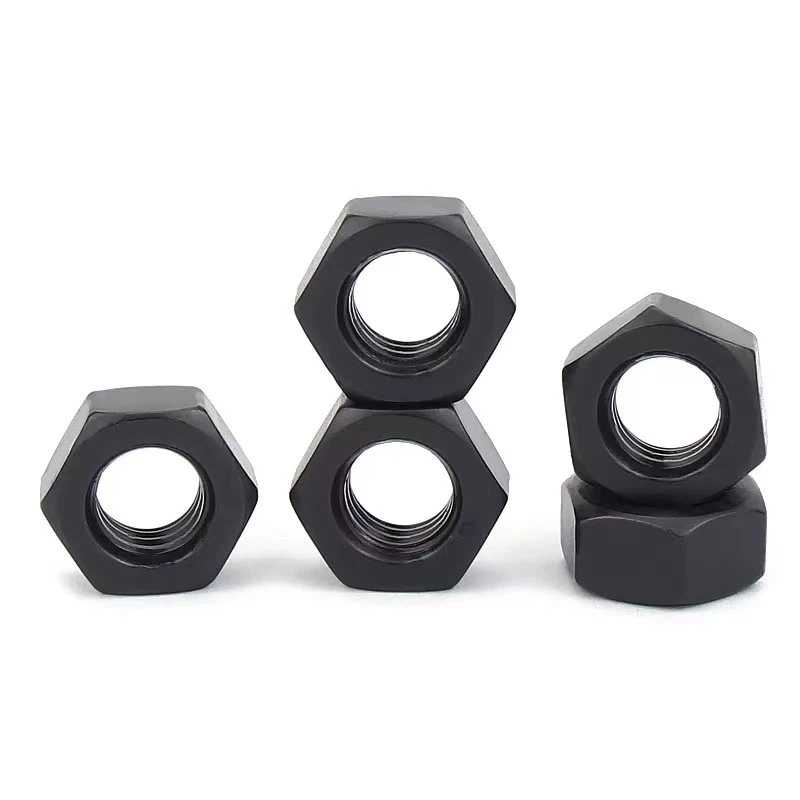
Heavy hex nuts are characterized by their larger and thicker design compared to standard hex nuts. They have a wider and taller profile, which provides increased surface area for contact with the mating surface. This design feature allows heavy hex nuts to distribute the clamping force over a larger area, reducing the risk of damage to the connected materials. You can find a wide range of heavy hex nuts on our website Heavy Hex Nut.
On the other hand, flange nuts have a built - in washer - like flange at one end. This flange serves as an integrated locking mechanism and distributes the load over a larger area similar to a washer. The flange can be either plain or serrated. Serrated flanges provide additional resistance to loosening due to vibration.
2. Strength and Load - Bearing Capacity
Heavy hex nuts are designed to handle high - stress applications. Their larger size and thicker walls give them greater strength and load - bearing capacity. They are commonly used in structural applications, such as building construction, bridge building, and heavy machinery manufacturing. For instance, in a bridge construction project, heavy hex nuts are used to secure large steel beams together. The increased strength of heavy hex nuts ensures that the connections remain stable under heavy loads and environmental stresses.
Flange nuts, while also strong, may not have the same high load - bearing capacity as heavy hex nuts in extremely heavy - duty applications. However, they are still suitable for many medium - to high - stress applications. Their integrated flange helps to prevent loosening, which is important in applications where vibration is a concern, such as automotive engines and machinery.
3. Installation and Removal
Installing heavy hex nuts requires a wrench or a socket that fits the nut's size. The larger size of heavy hex nuts can make them easier to grip and turn, especially in applications where there is enough space. However, in tight spaces, the larger size can also be a disadvantage. For example, in a compact machine where components are closely packed, it may be challenging to use a wrench to install or remove a heavy hex nut.

Flange nuts are generally easier to install in tight spaces because of their integrated flange. The flange acts as a built - in washer, eliminating the need to install a separate washer. This can save time during the installation process. When it comes to removal, the flange can sometimes make it a bit more difficult to access the nut with a wrench, especially if the flange is serrated.
4. Resistance to Loosening
One of the significant differences between heavy hex nuts and flange nuts is their resistance to loosening. Heavy hex nuts rely on proper tightening torque to stay in place. In applications with high vibration, such as in a mining equipment, heavy hex nuts may require additional locking mechanisms, such as lock washers or thread - locking compounds, to prevent loosening.
Flange nuts, particularly those with serrated flanges, offer better resistance to loosening due to vibration. The serrations on the flange bite into the mating surface, creating a frictional force that helps to keep the nut in place. This makes flange nuts a popular choice in automotive and aerospace applications, where vibration is a constant concern.
5. Cost
The cost of heavy hex nuts and flange nuts can vary depending on factors such as material, size, and quantity. Generally, heavy hex nuts may be more expensive than standard nuts due to their larger size and higher manufacturing costs. However, when compared to flange nuts, the cost difference is not always significant. In some cases, the cost of a flange nut may be slightly higher due to the additional manufacturing process required to form the flange.
6. Applications
Heavy hex nuts are widely used in industries where high - strength connections are required. Some common applications include:
- Construction: In building frames, columns, and beams.
- Industrial Machinery: For securing large components in manufacturing equipment.
- Transportation: In the construction of trucks, trains, and ships.
Flange nuts are commonly used in applications where vibration resistance and ease of installation are important. Some typical applications are:
- Automotive: In engine components, suspension systems, and body panels.
- Aerospace: For securing various parts in aircraft engines and airframes.
- Electrical Equipment: In the assembly of electrical enclosures and cabinets.
7. Material and Finish
Both heavy hex nuts and flange nuts are available in a variety of materials, including carbon steel, stainless steel, and alloy steel. Carbon steel is the most common material due to its low cost and good strength. Stainless steel is used in applications where corrosion resistance is required, such as in marine environments or food processing plants. Alloy steel is used for high - strength applications.
The finish of the nuts can also vary. Common finishes include zinc plating, galvanizing, and black oxide. Zinc plating provides basic corrosion protection, while galvanizing offers more durable corrosion resistance. Black oxide is often used for aesthetic purposes and also provides some corrosion resistance.
8. Availability
As a Heavy Hex Nut supplier, I can attest to the wide availability of heavy hex nuts in different sizes and materials. They are a standard fastener in the industry, and most fastener suppliers carry a variety of heavy hex nuts. You can also find specific sizes like 16 Hex Nut and 22mm Hex Nut on our website.
Flange nuts are also widely available, but the range of sizes and materials may be slightly more limited compared to heavy hex nuts. However, they can still be easily sourced from most fastener suppliers.
Conclusion
In summary, both heavy hex nuts and flange nuts have their own unique advantages and are suitable for different applications. Heavy hex nuts are ideal for high - stress, heavy - duty applications where strength and load - bearing capacity are the primary concerns. Flange nuts, on the other hand, are better suited for applications where vibration resistance and ease of installation are important.
When choosing between heavy hex nuts and flange nuts, consider the specific requirements of your application, such as the level of stress, the presence of vibration, the available space for installation, and the budget. If you have any questions about which type of nut is right for your project, or if you're interested in purchasing heavy hex nuts, please feel free to contact us. We're here to help you make the best choice for your fastening needs.
References
- Machinery's Handbook, 31st Edition
- Fastener Standards Handbook, ASME B18.2.2
- Automotive Fastener Design and Application Guide