

Can I use a flange nut in an electrical application?
Nov 11, 2025
Leave a message
When it comes to electrical applications, the selection of appropriate hardware is crucial for ensuring safety, reliability, and optimal performance. One common question that arises is whether a flange nut can be used in an electrical application. As a flange nut supplier, I'm here to provide a comprehensive analysis of this topic, exploring the technical aspects, advantages, and potential considerations.
Understanding Flange Nuts
Before delving into their suitability for electrical applications, let's first understand what flange nuts are. A flange nut is a type of nut with an integrated washer - like flange at one end. This flange provides a larger bearing surface compared to a standard nut, which helps distribute the load more evenly and reduces the risk of the nut loosening due to vibration. Flange nuts come in various sizes, materials, and standards, such as the DIN6923 Flange Nut, 16 Flange Nut, and 8 Grade Galvanized Flange Nut.
Advantages of Using Flange Nuts in Electrical Applications
1. Improved Vibration Resistance
Electrical equipment often operates in environments where vibrations are present. Motors, generators, and other electrical devices can generate significant vibrations during their operation. Flange nuts, with their larger bearing surface, are better able to resist the loosening effects of vibration compared to standard nuts. This is especially important in electrical applications where loose connections can lead to increased resistance, overheating, and potential electrical failures.
2. Enhanced Load Distribution
In electrical installations, components need to be securely fastened to ensure proper electrical conductivity and mechanical stability. The flange of a flange nut distributes the clamping force over a larger area, reducing the stress on the mating surface. This helps prevent damage to the electrical components and ensures a more reliable connection. For example, when securing electrical panels or junction boxes, a flange nut can provide a more stable and secure fastening solution.
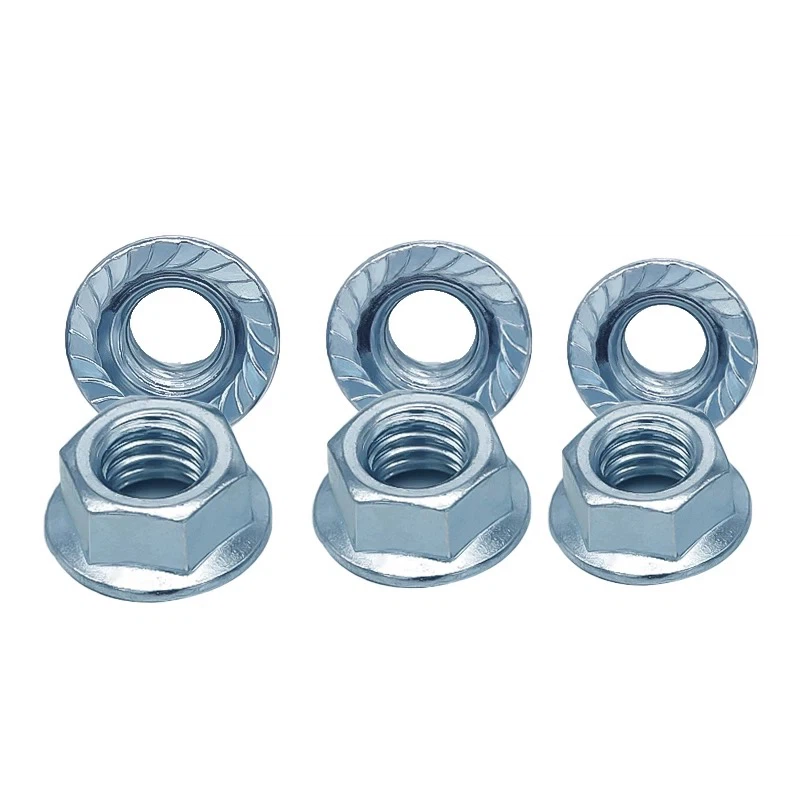

3. Space - Saving Design
In some electrical applications, space can be limited. Flange nuts eliminate the need for an additional washer, which can save space and simplify the assembly process. This is particularly beneficial in compact electrical enclosures or when working with densely packed electrical components.
Considerations When Using Flange Nuts in Electrical Applications
1. Material Selection
The choice of material for flange nuts in electrical applications is critical. Electrical conductivity, corrosion resistance, and mechanical strength are all important factors to consider. For most general - purpose electrical applications, stainless steel or brass flange nuts are commonly used. Stainless steel offers good corrosion resistance and mechanical strength, while brass provides excellent electrical conductivity. However, in high - voltage or high - current applications, special materials with specific electrical properties may be required.
2. Insulation Requirements
In some electrical applications, it may be necessary to ensure electrical insulation between the nut and the electrical components. If the flange nut is in direct contact with live electrical parts, it could potentially cause a short - circuit or other electrical hazards. In such cases, insulated flange nuts or the use of insulating washers may be required to prevent electrical conduction.
3. Torque Specification
Proper torque application is essential when using flange nuts in electrical applications. Over - tightening can damage the electrical components or the nut itself, while under - tightening can result in loose connections. It is important to follow the manufacturer's recommended torque specifications to ensure a secure and reliable connection.
Case Studies
Let's take a look at some real - world examples of flange nut applications in the electrical industry.
1. Solar Panel Installations
In solar panel installations, flange nuts are used to secure the mounting brackets and electrical connectors. The vibration - resistant properties of flange nuts are crucial in this application, as solar panels are often exposed to wind and other environmental factors that can cause vibrations. By using flange nuts, the risk of loose connections is reduced, ensuring the long - term reliability of the solar power system.
2. Industrial Electrical Control Panels
Industrial electrical control panels house a variety of electrical components, including switches, relays, and circuit breakers. Flange nuts are used to fasten these components to the panel, providing a stable and secure mounting solution. The space - saving design of flange nuts is particularly advantageous in these applications, as it allows for more efficient use of the limited space inside the control panel.
Conclusion
In conclusion, flange nuts can be a suitable choice for many electrical applications. Their vibration resistance, enhanced load distribution, and space - saving design make them a valuable option for securing electrical components. However, it is important to carefully consider factors such as material selection, insulation requirements, and torque specification to ensure the safe and reliable use of flange nuts in electrical systems.
As a flange nut supplier, we offer a wide range of flange nuts to meet the diverse needs of the electrical industry. Whether you are working on a small - scale electrical project or a large - scale industrial installation, we can provide you with high - quality flange nuts that meet your specific requirements.
If you are interested in learning more about our flange nuts or have any questions regarding their use in electrical applications, please feel free to contact us for a detailed discussion. We are committed to providing you with the best products and technical support to ensure the success of your electrical projects.
References
- "Handbook of Electrical Engineering", McGraw - Hill Professional
- "Mechanical Fasteners and Their Applications", Industrial Press Inc.
- Manufacturer's specifications for flange nuts and electrical components.